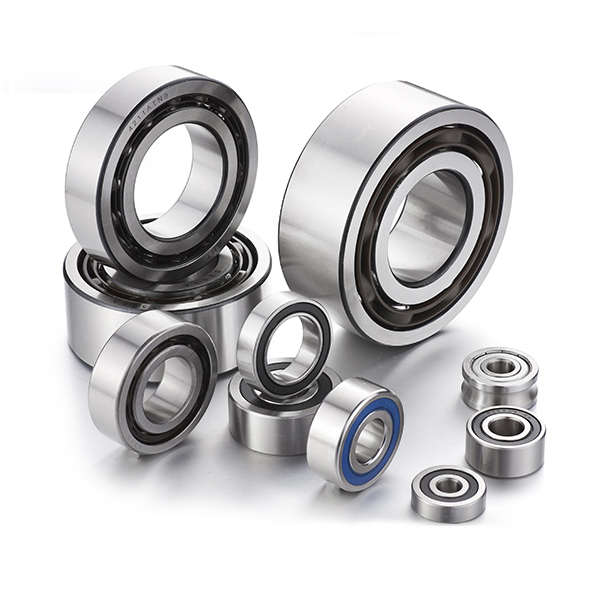
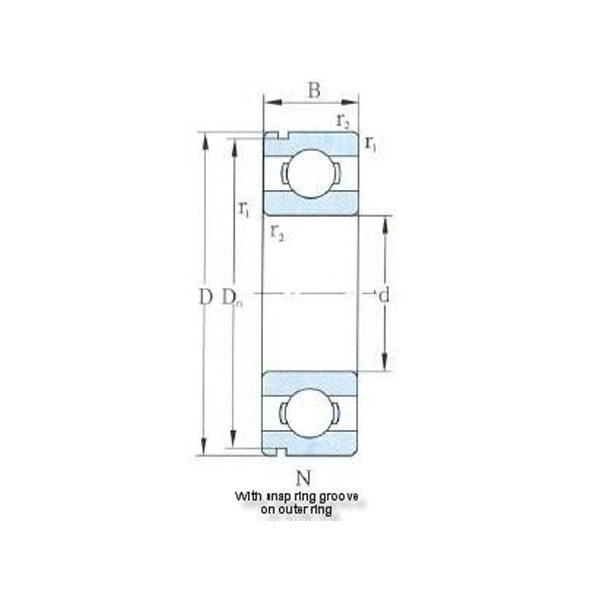
A replacement bearing can destroy a repaired motor within weeks without a single flaw in its material or lubrication. The cause is usually invisible: the tolerance class was different. A standard-class bearing and a precision-class bearing of the same reference number look identical, but their actual bore diameters, outside diameters, and runout values fall in different ranges. Mounted on the same shaft, the precision bearing may produce a controlled interference fit while the standard bearing permits micro-creep, fretting, and progressive vibration. The difference shows up as heat, noise, and premature failure.
The practical conclusion comes first: tolerance class decides how a bearing fits its shaft and housing, how accurately it rotates, and how quickly it wears in service. If you select, purchase, or replace bearings, understanding bearing tolerances helps you avoid fit failures, overspecification costs, and repeated repairs that no lubrication change can fix.
Bearing tolerances are the permitted deviations from nominal dimensions plus the permitted levels of geometric inaccuracy in the manufactured rings. Standards such as ISO 492 and JIS B 1514 organize these requirements into three groups:
Some buyers treat tight tolerances as an optional upgrade, but every bearing operates inside a tolerance class. Class P0 bearings simply allow a wider manufacturing envelope than Class P5 bearings. Tighter classes constrain more of the production process, which is why precision grades cost more and why they cannot be selected casually without a technical reason.
Two designation systems dominate the market. The ISO 492 and JIS B 1514 classes apply to most rolling bearings and are commonly written with a P prefix: P0, P6, P5, P4, and P2. Precision improves from P0 to P2. The ABEC scale applies to ball bearings in North American markets, with grades ABEC 1, 3, 5, 7, and 9 following a similar ladder. In a typical catalog, deep groove ball bearings show this progression clearly: the same reference number can be supplied with narrower bore and outside diameter limits in P5 than in P0.
P0 is the standard grade for general electric motors, gearboxes, pumps, and most industrial machinery. P6 appears where running accuracy or fit predictability matters more, such as better motor positions and machine tool auxiliary supports. P5 is common in precision spindles and high-speed equipment. P4 and P2 are reserved for very high speed spindles, instruments, and ultra-precision rotating assemblies.
For ball bearings, ABEC 1 approximates ISO P0, ABEC 3 approximates P6, ABEC 5 approximates P5, ABEC 7 approximates P4, and ABEC 9 approximates P2. The mapping is convenient, but it is not identical for every measurement; ABEC focuses largely on dimensional accuracy, while ISO 492 also defines running accuracy limits by class and bearing type.
| ISO / JIS class | ABEC grade | Representative applications |
|---|---|---|
| P0 | ABEC 1 | Electric motors, pumps, conveyors, standard gearboxes |
| P6 | ABEC 3 | Higher-speed motors, machine tool auxiliary positions |
| P5 | ABEC 5 | Precision spindles, high-speed equipment, measuring devices |
| P4 | ABEC 7 | Machine tool spindles, aerospace accessories, turbine supports |
| P2 | ABEC 9 | Ultra-precision instruments, high-precision spindle systems |
Always verify the standard that applies to the bearing type you are sourcing. For cylindrical roller bearings, spherical roller bearings, and tapered roller bearings, the ISO class designation is the reference; ABEC is a ball bearing scale only.
Fit is where bearing tolerances become visible. The inner ring must sit on a shaft, and the outer ring must seat in a housing. The actual fit depends on the combination of the bearing bore tolerance and the shaft tolerance, plus the bearing outside diameter tolerance and the housing tolerance.
Consider a 6311 deep groove ball bearing, whose nominal bore is 55 mm. In the ISO 492 size step above 50 mm, a P0 bearing allows a bore deviation of approximately 0 to -15 microns, so the finished bore can be smaller than 55 mm by up to 15 microns, but never larger. A P5 bearing narrows this range to approximately 0 to -9 microns. With the same shaft, the P5 bearing delivers a much tighter range of possible fits, which is why precision classes are preferred wherever fit predictability affects performance.
This also explains why two bearings with the same reference number can behave differently on the same shaft: their real dimensions sit in different places within different tolerance envelopes. Creep marks on the shaft journal, fretting corrosion, and loose outer rings are often traced back to a tolerance class change that was not recorded in the maintenance history.
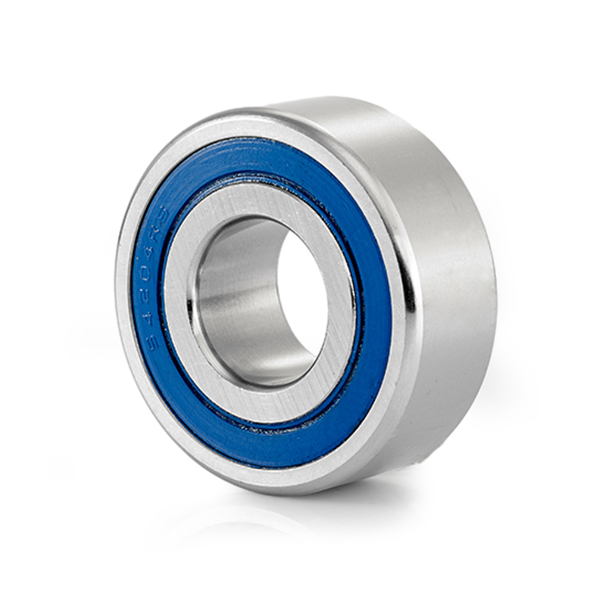
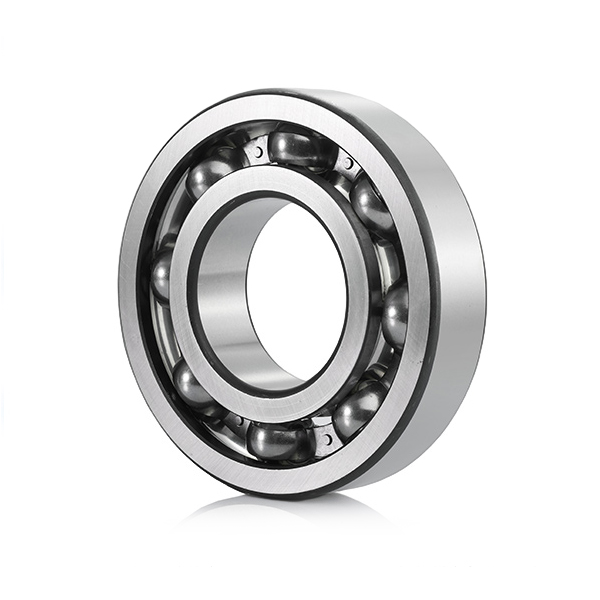
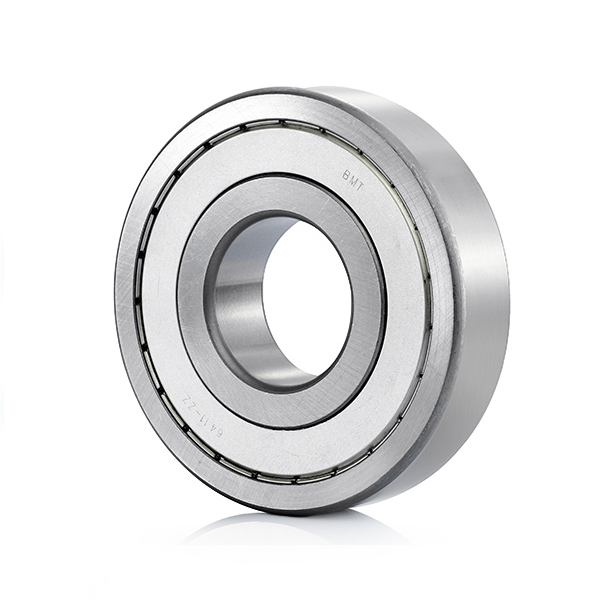 Chrome Steel Deep Groove Ball Bearing 6311 with Multiple SealsThis 6311 deep groove ball bearing in chrome steel is offered in bore sizes from 1 to 50 mm with P0/P6/P5 precision options and 2RS or ZZ seals, relevant where tolerance class changes affect runout and high-speed vibration.View Product →
Running accuracy is measured as the radial or axial runout of the rotating ring surfaces. It does not describe size; it describes how much the shaft centerline moves as the bearing rotates. At 1,500 r/min, a small runout produces vibration levels that many machines tolerate. At 10,000 r/min, the same runout generates higher centrifugal loads, noise, and heat that shorten grease life and accelerate raceway fatigue.
High-speed applications therefore need a combination of a tighter tolerance class, lower internal friction, and carefully designed internal geometry. A P5 bearing has a smaller allowed runout than a P0 bearing of the same reference number, which is why high-speed motor builders and repair shops specify precision classes instead of the standard grade. The mechanism behind this behavior is discussed in the article on high-speed low-friction torque deep groove ball bearings.
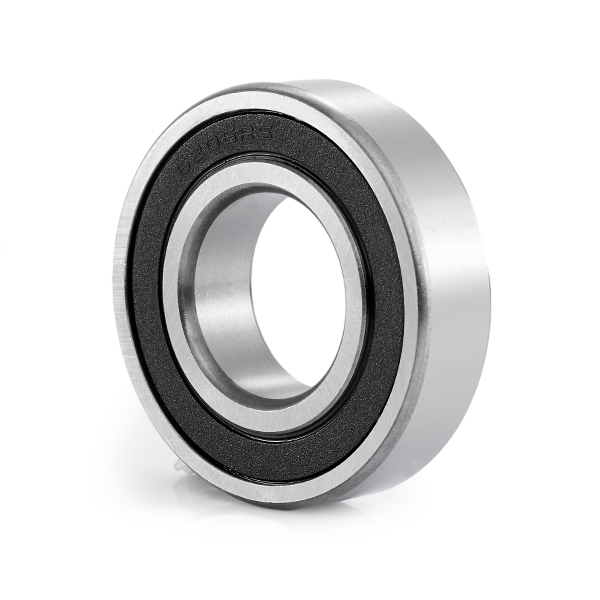 High Speed Low Friction Torque Deep Groove Ball BearingsDesigned for high-speed operation with optimized ball and raceway geometry to reduce stress concentration and wear. Available in multiple precision classes and materials, these bearings suit applications where tight tolerance and low internal friction are critical.View Product →
A common specification error is to mix up tolerance class with radial internal clearance. Tolerance class governs the size, shape, and running accuracy of the rings. Radial internal clearance, identified by the suffixes C2, C0, C3, C4, and C5, defines the internal play between the rolling elements and the raceways when the bearing is unmounted.
The two parameters interact in service. A P5 bearing can be supplied with C0 clearance for normal temperature conditions or with C3 clearance when the shaft expands more than the housing under heat. An interference fit on the inner ring also reduces the internal clearance after mounting. If the combined effect leaves too little internal clearance, the bearing runs hot; if too much is left, the shaft may lose positional control, or the bearing may generate noise and vibration.
The practical rule for motor and pump applications is to verify the temperature difference between shaft and housing before choosing the clearance group. In most electric motors the shaft runs warmer than the housing, which is why C3 is widely recommended. For precision positioning equipment, the tighter the required positional accuracy, the more carefully fit and clearance must be coordinated with the tolerance class.
For general industrial duty in fans, pumps, conveyors, and agricultural machinery, Class P0 bearings are usually sufficient. Choosing P5 or P4 for every bearing increases unit cost and lead time without improving service life, because the limiting component in these machines is rarely bearing runout. Precision grades belong where the application proves the need: high speed, tight positional control, or very smooth operation.
Identical reference numbers can hide different tolerance classes. If you replace a bearing without documentation, inspect the marking on the ring or the packaging. A suffix such as P5 or ABEC 5 changes the measurement envelope completely. When markings are unreadable, measure the bore and outside diameter in several planes and compare the values with the ISO 492 table for that bearing type.
A complete bearing specification reads like this: deep groove ball bearing 6311, P5 class, C3 clearance, steel cage, rubber seals, lithium grease. Leaving out the tolerance class or the clearance group pushes the supplier to the default option, usually P0 and C0, which may be exactly the choice that caused the original problem.
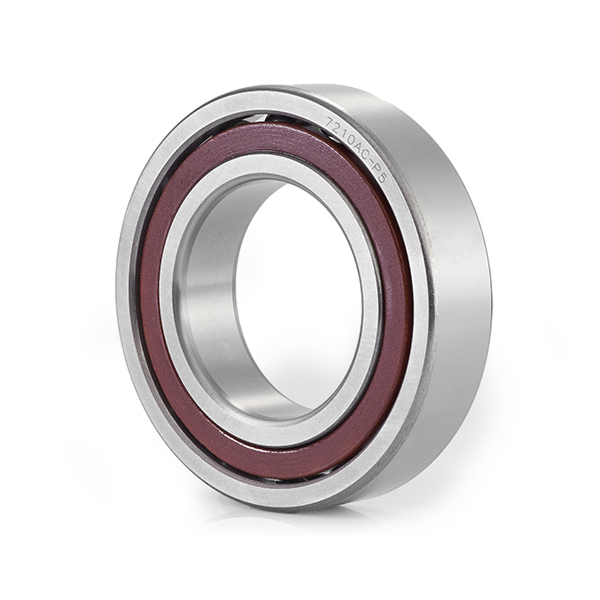
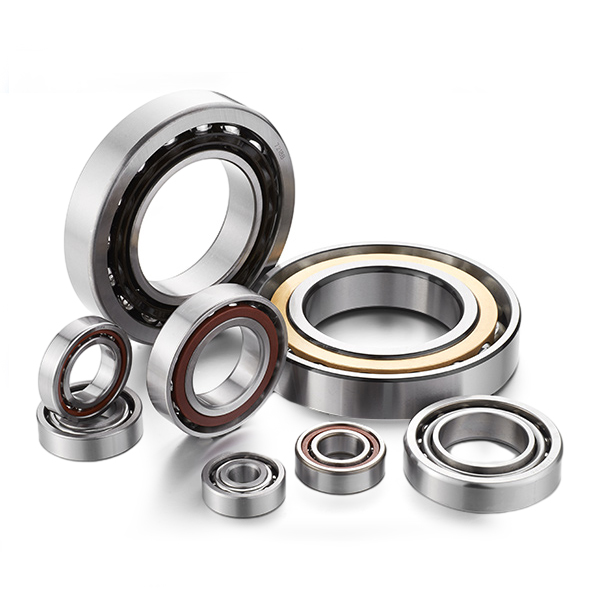
Working with a manufacturer that controls its own production and testing simplifies this process. Ningbo Demy (D&M) Bearings, for example, operates automated production and inspection lines, maintains complete test equipment, and holds ISO/TS 16949 certification. Its catalog covers deep groove ball bearings, angular contact ball bearings, cylindrical roller bearings, and automotive bearings across the common tolerance classes. When a component must carry a combined radial and axial load with controlled running accuracy, single-row angular contact ball bearings are a practical and available choice. In every case, ask the supplier for the actual measured values of bore, outside diameter, and runout for the batch you intend to buy; any manufacturer with a real quality system can provide them.
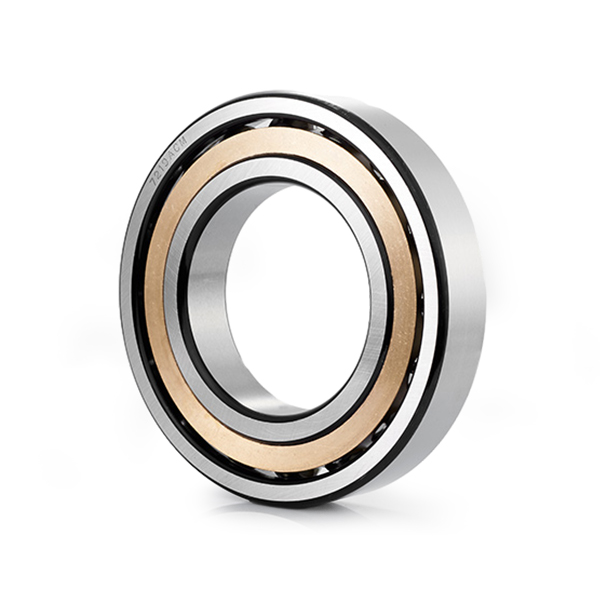 Single Row Angular Contact Ball Bearing for Combined LoadsThis bearing handles moderate to high radial and axial loads in one direction, typically with a 30-degree contact angle. Its axial stiffness suits electric motors, pumps, fans, and compressors, and it is a practical choice when controlled running accuracy is required.View Product →
A bearing specification is incomplete until the tolerance class and the clearance group are on paper. The reference number identifies the design, the tolerance class defines the precision envelope, and the clearance group defines the internal setting. Together they determine whether the bearing fits, runs, and lasts as intended. Buyers who document these parameters, and suppliers who measure and report them, avoid most repetitive bearing failures - and the cost of stopping a production line twice for the same problem.

Copyright © Ningbo Demy (D&M) Bearings Co., Ltd. All Rights Reserved.
 OEM/ODM Industrial Bearing Manufacturers

 Search
 EN
EN English
 Español