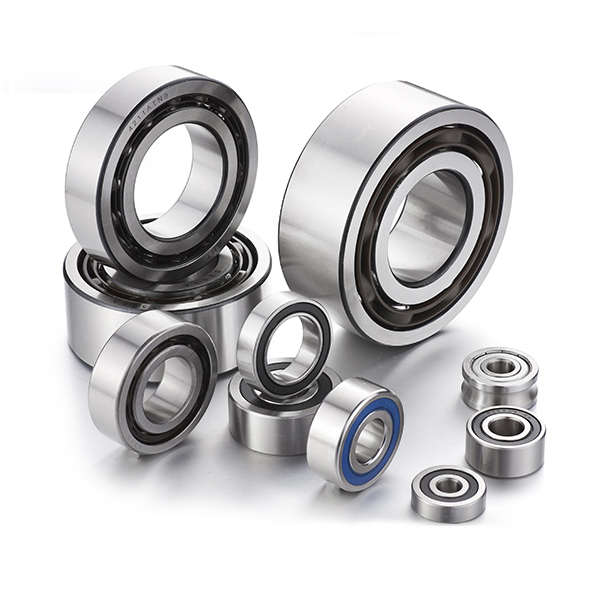
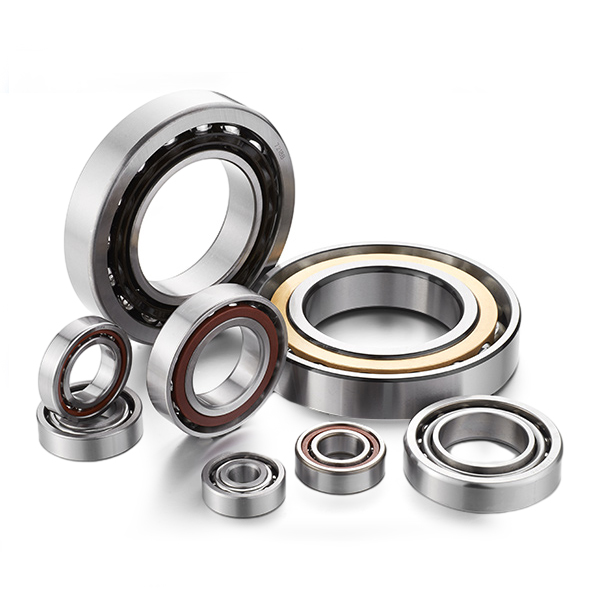
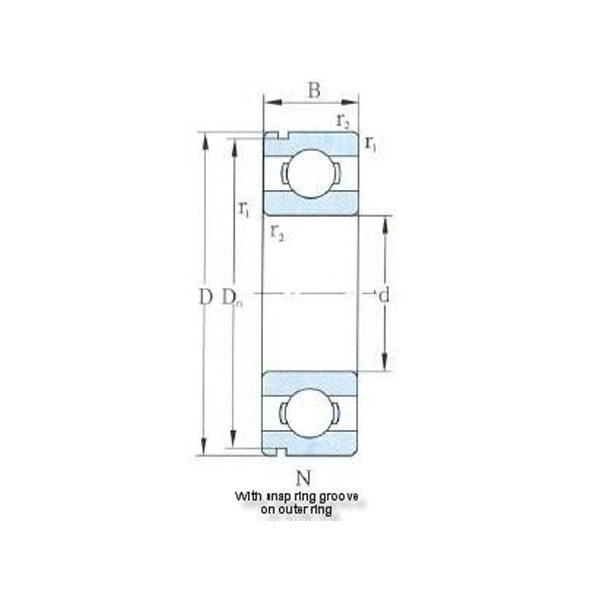
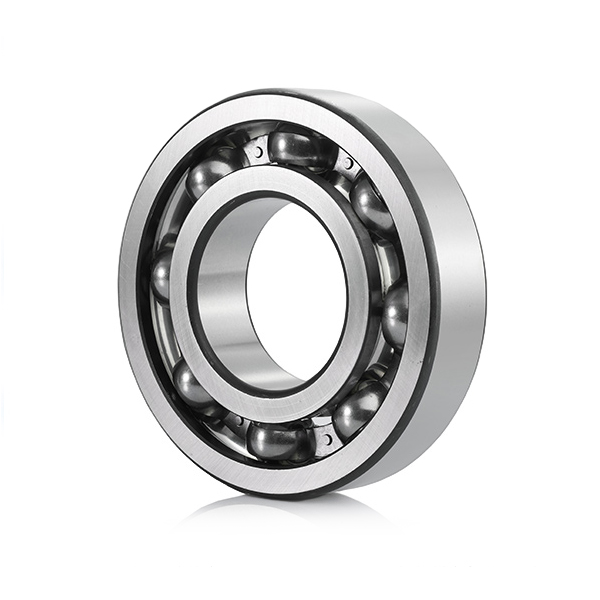
An axial load is the force that tries to push a shaft through a bearing housing. In a vertical pump, a gearbox input shaft, or a wheel hub under cornering, that force is real. The short answer is yes: many ball bearings can take axial load, but the amount and direction depend on the bearing type. Deep groove ball bearings carry moderate axial load in both directions. Angular contact ball bearings carry much more, often in one direction per row. Thrust ball bearings are built almost entirely for axial load. Cylindrical roller bearings usually cannot take meaningful axial load unless they have flanges or are paired with a separate locating bearing.
Axial overload rarely announces itself. It shows up as brinelling, cage wear, heat, or a shaft that moves when it should not. The practical question is not simply whether a ball bearing can take axial load, but how much, in which direction, and under what combined radial and axial forces.
| Bearing type | Axial direction | Relative axial capacity | Practical note |
|---|---|---|---|
| Deep groove ball bearing | Both directions | Moderate, often 25 to 50 percent of radial dynamic rating for pure axial load | Good default for light to moderate thrust; capacity drops sharply when radial load is also present. |
| Single row angular contact ball bearing | One direction | High, typically 50 to 150 percent of radial rating depending on contact angle | Must be opposed by a second bearing or preloaded pair. |
| Double row angular contact ball bearing | Both directions | High | Compact solution for combined loads; 30 and 38 series are common. |
| Four point contact ball bearing | Both directions | High axial, limited radial | Useful where axial load dominates and mounting space is tight. |
| Single direction thrust ball bearing | One direction | Very high axial, no radial | Requires minimum axial load in some designs to avoid ball skidding. |
| Double direction thrust ball bearing | Both directions | Very high axial, no radial | Common in vertical shafts and swivel applications. |
The table is a starting point. A bearing that can take 5 kN of pure axial load may take far less when it also supports radial load. Combined load is where most axial failures begin.
Deep groove ball bearings have a raceway slightly deeper than a pure radial bearing needs. When axial force pushes the inner ring sideways, the balls climb a small distance up the shoulder. That movement creates a contact angle, so the bearing can carry thrust in both directions. The effect is limited. For a bearing with a 10 kN dynamic radial rating, a reasonable first estimate for pure axial load is 2.5 to 5 kN. Exact values depend on clearance, preload, lubrication, and the ratio of axial to radial load.
Internal clearance changes the picture. A C3 clearance bearing may need more axial movement before the balls engage the shoulder. Preload removes that movement and increases axial rigidity, but too much preload raises friction and reduces life. Misalignment concentrates axial load on a few balls and cuts capacity.
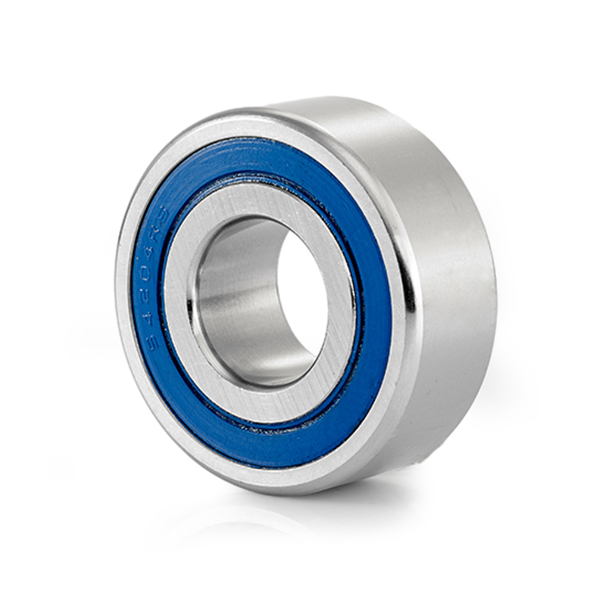
For light axial duties, a standard deep groove ball bearing is often the most economical choice. It handles radial and axial load together, runs quietly, and is easy to seal. A useful reference is this discussion of what axial loads deep groove ball bearings are suitable for.
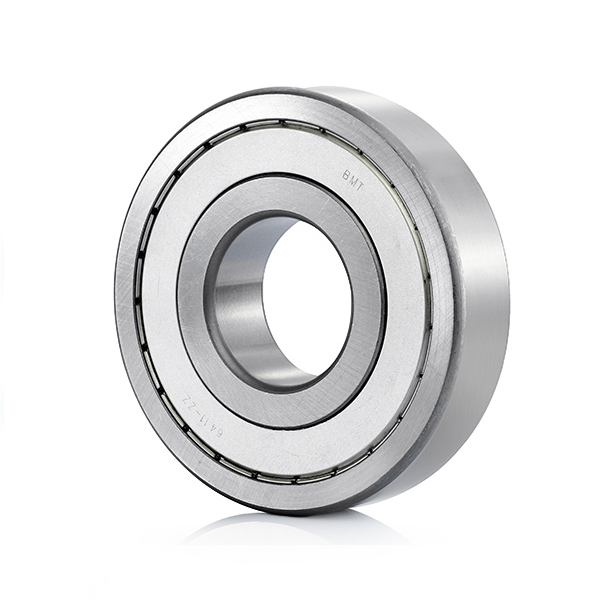 Chrome Steel Deep Groove Ball BearingsA versatile, economical choice for combined radial and axial loads in pumps, conveyors, and electric motors. Not intended for heavy thrust applications.View Product →
For example, a 6311 deep groove ball bearing is common in medium-duty pumps, conveyors, and electric motors. Its axial capacity is useful, but it is not a thrust bearing. If axial load is the main load, use an angular contact or thrust design.
Angular contact ball bearings are designed with a contact angle. Common angles are 15, 25, and 40 degrees. A larger contact angle increases axial capacity and reduces radial capacity. A single row bearing takes axial load in one direction only, so it is normally mounted against a second bearing. Back to back mounting gives better moment stiffness; face to face is more tolerant of misalignment; tandem adds axial capacity in one direction.
Double row and four point contact bearings take axial load in both directions in one unit. They suit housings that cannot fit two separate bearings. Four point contact bearings handle reversing axial loads in gearboxes and cranes, but their radial capacity is limited.
Preload is common. A light preload increases stiffness and running accuracy. Too much preload raises temperature and shortens life. The right preload depends on speed, lubrication, and required axial rigidity.
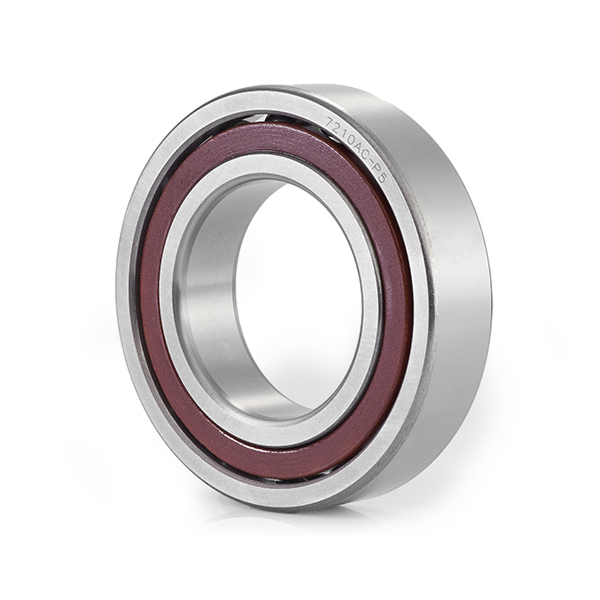
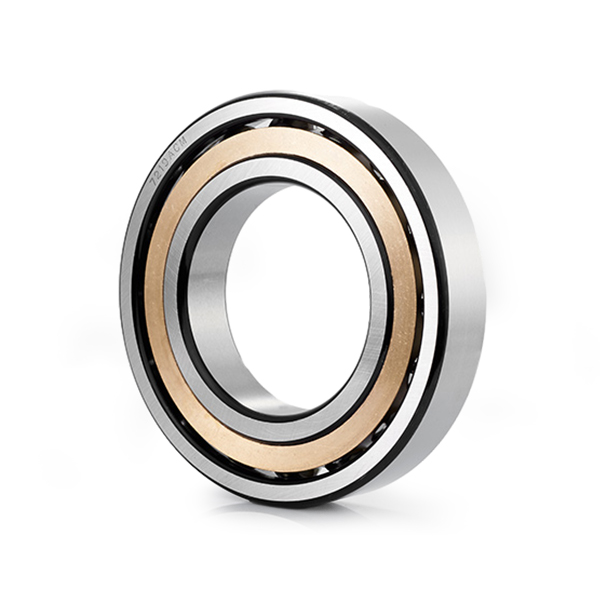 Single Row Angular Contact Ball BearingsA good starting point when axial load exceeds deep groove capacity; used in electric motors, pumps, fans, and compressors. Preload increases stiffness.View Product →
A single row angular contact ball bearing is a good starting point when axial load is higher than a deep groove bearing can handle and acts mainly in one direction.
Thrust ball bearings are made for axial load. They consist of shaft and housing washers and a ball and cage assembly. Single direction thrust bearings take axial load in one direction; double direction bearings take it in both. They cannot take radial load, and they generally have lower speed limits than radial ball bearings. Some designs require a minimum axial load to prevent ball skidding.
Mounting matters. Washers must be flat and parallel. A spherical housing washer can compensate for small misalignment, but it does not make the bearing self-aligning under radial load. If radial load exists, a separate radial bearing should carry it. Thrust bearings are common in vertical pumps, extruders, crane hooks, and swivel joints.
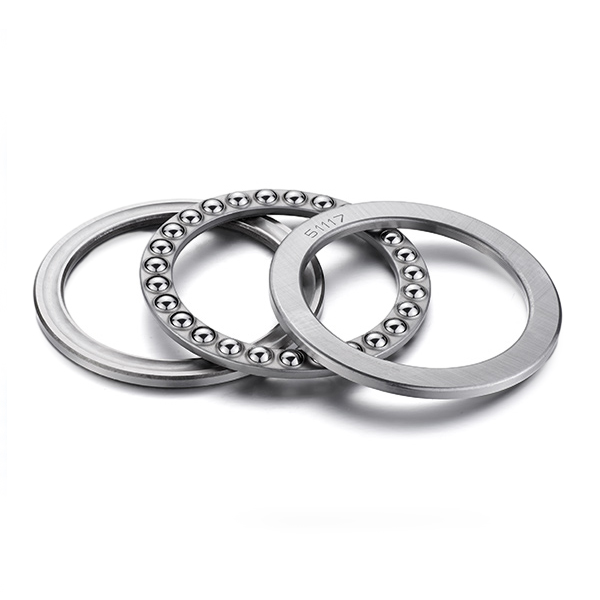 Single Direction Thrust Ball BearingsFor well-defined axial loads in stiff housings, offering precise, low-friction operation. Requires flat, parallel washers and suits vertical pumps, extruders, and swivel joints.View Product →
A single direction thrust ball bearing is a precise, low-friction solution when axial load is well defined and the housing is stiff.
Most applications do not apply pure axial load. A pump impeller creates both radial and axial forces. A gearbox shaft has radial tooth loads and axial thrust. When both act together, check the equivalent dynamic load: P = X Fr + Y Fa. X and Y depend on bearing type and the ratio Fa / Fr or Fa / Cor. For deep groove ball bearings, an e value describes when axial load starts to dominate. If Fa / Fr is below e, axial load has little effect. If it is above e, axial load adds significantly to bearing load and can reduce life.
| Bearing type | Typical Fa / Fr threshold | Relative threshold bar |
|---|---|---|
| Deep groove ball bearing | 0.2 to 0.4 | ==== |
| Single row angular contact, 15 degrees | 0.4 to 0.8 | ======== |
| Single row angular contact, 25 degrees | 0.8 to 1.2 | ============ |
| Single row angular contact, 40 degrees | 1.2 to 2.0 | ==================== |
| Four point contact | 1.0 to 1.5 | ============== |
The threshold is not a hard limit. Once axial load passes the threshold, equivalent load rises, life falls, and raceway damage risk increases. A larger bearing or different type is often more cost effective than increasing preload.
If you are selecting a bearing for axial load, start with load direction, magnitude, and speed. Then choose the type. Use deep groove ball bearings for light to moderate axial load in both directions, angular contact bearings for higher axial load, and thrust ball bearings when axial load is the only significant load. Check the combined load case, then confirm clearance, preload, lubrication, and mounting tolerances.
At Ningbo D&M Bearings, we produce deep groove ball bearings, angular contact ball bearings, thrust ball bearings, and other types for industrial and automotive applications. If you have a shaft drawing with axial and radial load data, our team can help review the bearing choice and mounting arrangement.

Copyright © Ningbo Demy (D&M) Bearings Co., Ltd. All Rights Reserved.
 OEM/ODM Industrial Bearing Manufacturers

 Search
 EN
EN English
 Español