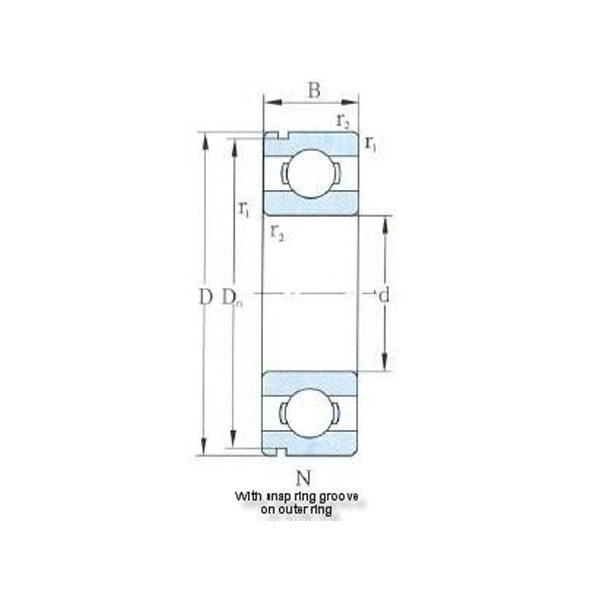
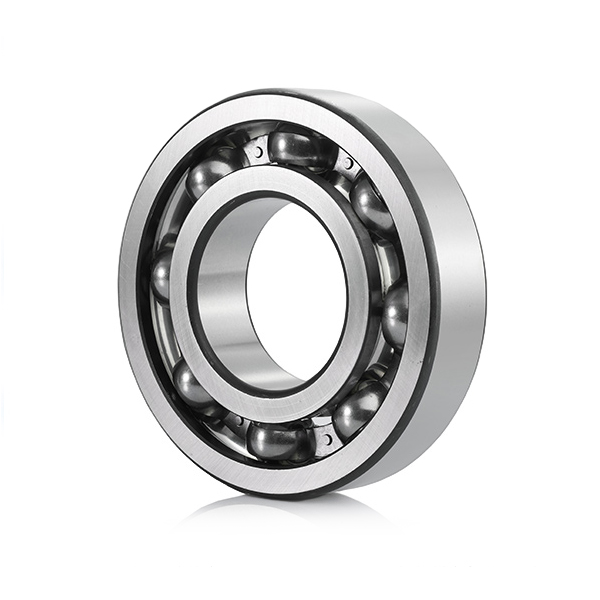
A shaft that measures 40.000 mm and a bearing bore specified at 40.000 mm may appear to be a perfect match, but appearances are misleading. If you slide them together by hand, the assembly can run for a while. Under real load, however, that small clearance can let the inner ring creep on the shaft, generate heat, and wear the seating surface. This is why bearing fit is one of the first checks a design engineer makes. A bearing fit is the relationship between the bearing bore and the shaft diameter, and between the bearing outside diameter and the housing bore. Getting that relationship right controls whether the load is transferred correctly, whether the bearing stays in place, and how long the bearing lasts. This guide explains the basics of shaft and housing fits, how to read a fit chart, and what to verify before installation.
Bearings fail early for many reasons, but fit problems are among the most avoidable. A fit that is too loose lets a ring move relative to its seating surface. On the shaft, this movement is called creep. The inner ring slowly turns, wears the shaft, generates metallic particles, and raises temperature. In a housing, a loose outer ring can spin and produce the same kind of damage.
A fit that is too tight is equally dangerous. The interference compresses the inner ring, reduces the internal clearance, and increases hoop stress. If the mounted clearance becomes negative, the bearing can generate heat and skid, and the rolling elements can be damaged. The goal is not maximum tightness or maximum looseness. It is controlled interference where the ring must be held and controlled clearance where it can float.
Every radial rolling bearing has two seating surfaces: the bore of the inner ring on the shaft and the outside diameter of the outer ring in the housing. The fit on each side is selected separately. A common starting rule is simple: if the load rotates relative to a ring, that ring needs an interference fit. If the load is stationary relative to a ring, a clearance or transitional fit is usually enough.
For a standard electric motor with a fixed bracket, the shaft rotates while the direction of the belt load stays fixed in space. That means the load rotates relative to the inner ring, so the inner ring is said to carry a rotating load and should be pressed onto the shaft. The outer ring sees the load in a fixed direction, so it is stationarily loaded and can sit in a housing with a slightly loose fit. If the arrangement is reversed and the outer ring rotates while the load direction stays fixed, the housing fit must provide the interference.
ISO fit symbols make this decision compact. Uppercase letters refer to the housing bore, and lowercase letters refer to the shaft. For common steel bearings, shaft fits such as k5 or m6 provide light to moderate interference, while housing fits such as H7 allow the outer ring to slide or sit close. When vibration or heavy loads are present, move to tighter fits such as n6 on the shaft or P7 in the housing.
Fit charts translate operating conditions into two tolerance values. Table 1 gives common starting points for steel radial bearings at normal operating temperature.
| Operating condition | Shaft tolerance | Housing bore tolerance |
|---|---|---|
| Rotating load on inner ring, normal loads | k5 or m6 | H7 |
| Rotating load on inner ring, heavy or impact loads | m6 or n6 | J7 |
| Rotating load on outer ring, normal loads | g6 or h6 | N7 or P7 |
| Indeterminate load direction or vibration | k5 or j5 | K7 or M7 |
These starting points assume steel shafts and cast-iron or steel housings, normal operating temperature, and bearing internal clearance in the normal group. They are not a substitute for calculation. A chart tells you where to start; measurement and application review tell you whether to move one tolerance grade tighter or looser.
For standard rolling bearings, the same fitting rules apply across sizes. A common industrial example is a chrome steel 6311 deep groove ball bearing, whose bore and outside diameter place it right in the middle of typical motor and pump applications. The fit recommendation is driven by the load path, not by the nominal size alone.
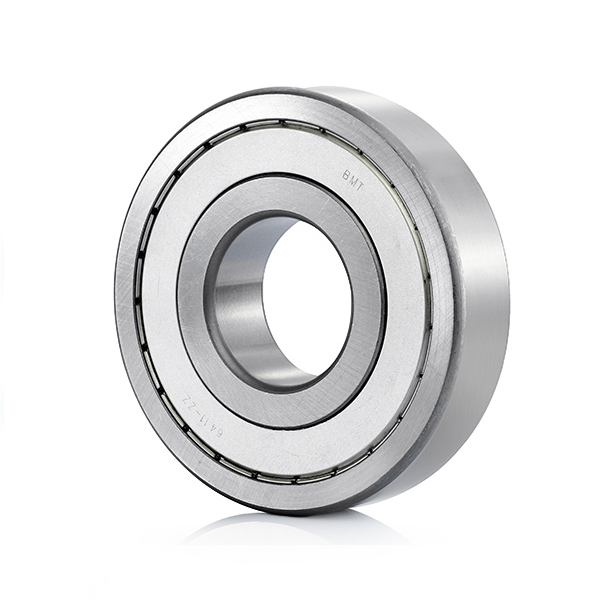 Chrome Steel 6311 Deep Groove Ball Bearing with 2RS or ZZ SealsThis 6311 deep groove ball bearing is a common mid-size choice for motors and pumps. Its fit recommendation follows the load path, so checking inner and outer ring rotation here clarifies the shaft and housing fits.View Product →
Start by separating the two fits. On the shaft, ask whether the inner ring must be locked against creep. In the housing, ask whether the outer ring must be locked or allowed to move. For a standard deep groove ball bearing range, those two answers map cleanly to the table above.
Before finalizing a fit, confirm the following factors:
Radial roller bearings are also sensitive to fit. A full-complement cylindrical roller bearing is often selected for heavy loads because it contains more rollers, but that advantage disappears if the rings are not held firmly on the shaft or in the housing. Fit selection for roller bearings should follow the same load-rotation principle and be verified after mounting by measuring the ring seat and the resulting clearance.
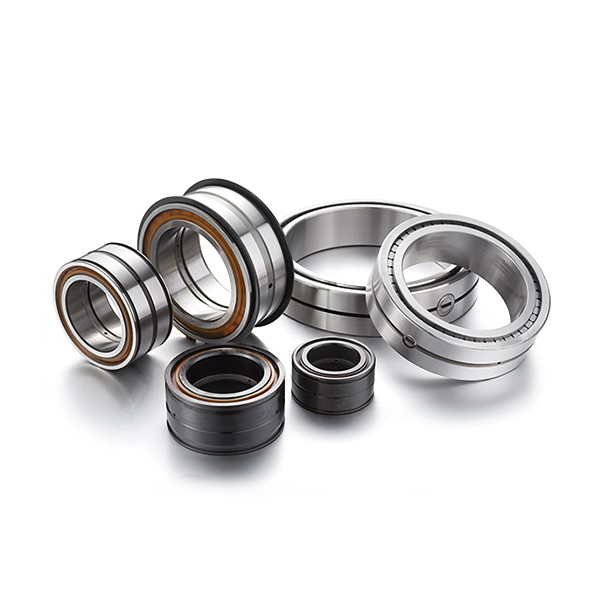 Full Complement Cylindrical Roller Bearing for Heavy Radial LoadsThis cageless roller bearing packs more rollers to handle heavy radial loads and is sensitive to fit. Understanding its mounting requirements reinforces the load-rotation principle discussed before the checks.View Product →
Fit selection only matters if the installation is controlled. Use the following checks:
For applications where field serviceability matters, a mounted pillow block bearing removes some of the risk from housing fitting because the housing bore is machined at the factory. You still need a correct shaft fit, but you no longer have to create a precise housing bore in the field.
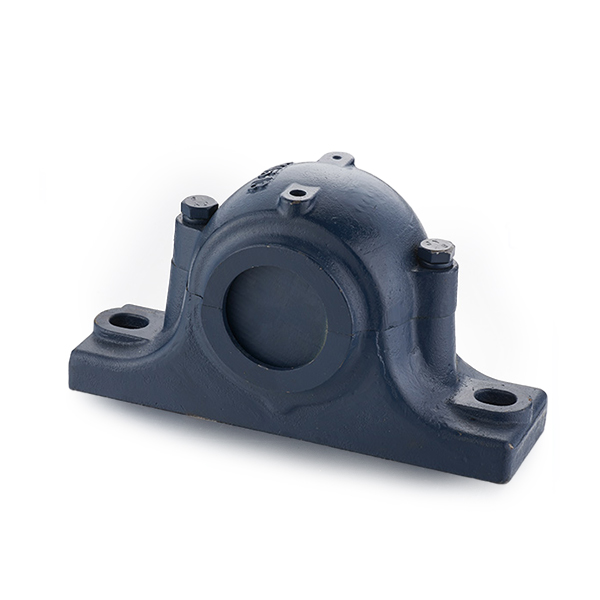 Mounted Pillow Block Bearing with Factory-Machined HousingThis mounted pillow block bearing has a factory-prepared housing bore, reducing field fitting risk. It still needs a correct shaft fit, making it a practical example when verifying fits and avoiding premature failures.View Product →
Bearing fit is not an afterthought. A bearing can be manufactured to the correct tolerance and still fail quickly if its shaft or housing is not prepared properly. The two questions to answer are always the same: which ring carries a rotating load, and what happens to internal clearance after mounting? Use a bearing fit chart as your starting point, verify the dimensions in the shop, and select fits that match the real operating load, temperature, and material behavior. Working with a bearing manufacturer that understands these application details makes it easier to specify the right product and avoid field failures.

Copyright © Ningbo Demy (D&M) Bearings Co., Ltd. All Rights Reserved.
 OEM/ODM Industrial Bearing Manufacturers

 Search
 EN
EN English
 Español