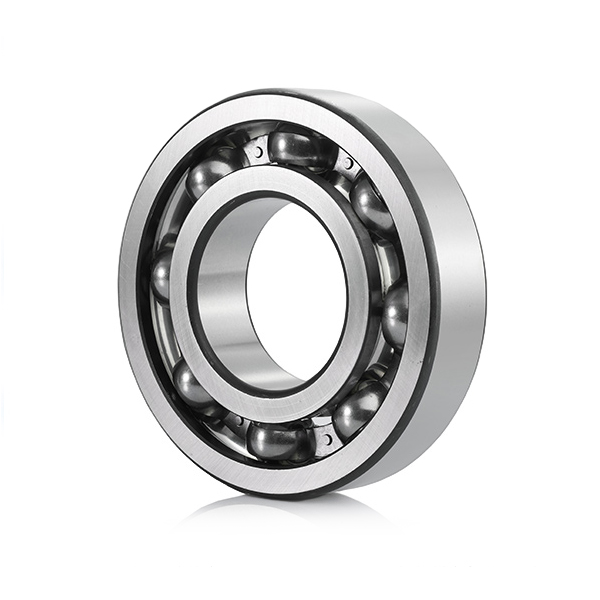
A maintenance planner sees two 6205-2RS bearings of the same size; one is marked ABEC 5 and one is marked ABEC 7. The price difference is enough to buy several spare bearings. The correct reaction is not to assume the ABEC 7 part is automatically better, but to ask what the machine actually needs.
The short answer is that ABEC 7 has tighter dimensional tolerances and less raceway runout than ABEC 5. In practice, ABEC 5 is sufficient for most industrial, automotive, and agricultural duty because speed and load rarely stress the tolerance limits. ABEC 7 becomes the right choice when the application demands very low vibration, high speed, or extremely consistent rotational accuracy.
ABEC stands for Annular Bearing Engineers' Committee, part of the American Bearing Manufacturers' Association. The numerical rating classifies allowable deviations for bore diameter, outside diameter, width, and the radial runout of the raceways. ABEC 1, 3, 5, 7, and 9 are the common classes, with ABEC 9 being the tightest. A higher ABEC number does not mean better steel, better seals, or higher load capacity; it means closer geometric limits on the parts that define roundness and finish.
The practical effect of these limits shows up in the running center of the shaft. A tighter class reduces the amount that the inner ring can wobble as the shaft rotates. For a typical small bore bearing, radial runout on ABEC 5 is around 3.5 micrometers; ABEC 7 reduces that to about 2.5 micrometers. That one-micrometer difference is decisive in a spindle running at tens of thousands of RPM, but almost invisible in a fan running at 1,500 RPM.
| Parameter | ABEC 5 | ABEC 7 |
|---|---|---|
| Corresponding ISO tolerance class | P5 | P4 |
| Radial runout, 10 mm bore (representative) | 3.5 micrometers | 2.5 micrometers |
| Relative cost | 1x | 1.5-3x |
| Speed suitability | Moderate speeds | High-speed, low-runout |
| Misapplication risk | Lower | Higher when shaft or housing is not precise |
ABEC grade is only one input in a bearing specification. Two bearings with the same ABEC 5 rating can have completely different load capacity if one uses a pressed steel cage and the other uses a machined brass cage. That is why comparing ABEC 5 and ABEC 7 in isolation can be misleading. The full specification should include internal clearance, cage material, seal type, grease, and the recommended mounting fits.
In short, ABEC is a precision class, not a quality class. A clean ABEC 5 bearing with a robust cage will often outperform an unprotected ABEC 7 bearing in a dusty mill or a marine environment.
For a mixer, conveyor, gearbox, pump, wheel hub, or agricultural implement, the design constraints are usually load capacity, sealing, and lubrication. The runout difference between ABEC 5 and ABEC 7 is small compared to shaft deflection, housing distortion, thermal expansion, or debris entering the seal. When the bearing is correctly fitted and lubricated, an ABEC 5 deep groove ball bearing will run quietly and maintain its accuracy for years.
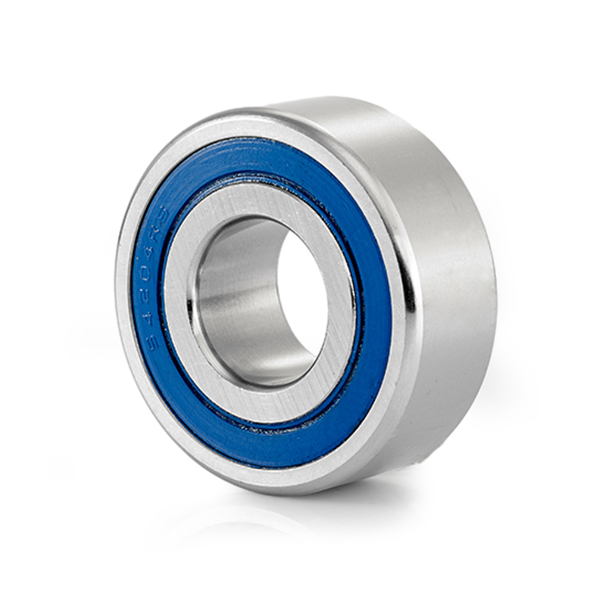
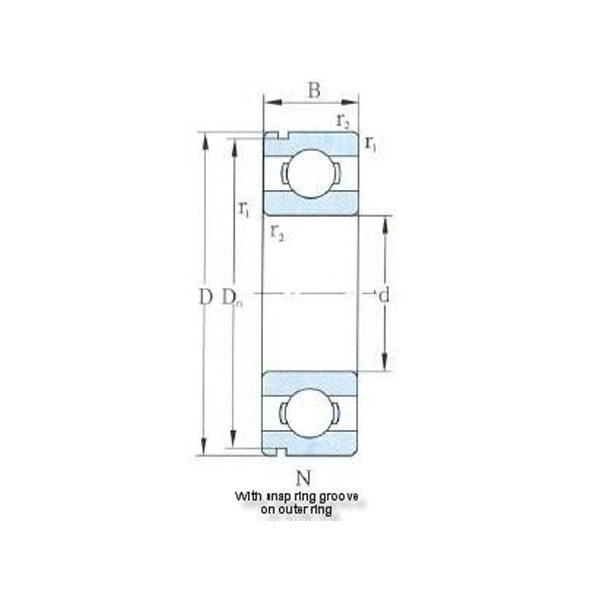
Many manufacturers stock deep groove ball bearing variants with shields, seals, snap rings, and filling slots. These features solve installation and protection problems before tolerance class comes into play. If you need a bearing to be axially located in a through-bore housing, a deep groove ball bearing with a snap ring on the outer ring is a simple way to reduce housing machining.
In this type of application, ABEC 5 is rarely the limiting factor; the seal drag, grease consistency, and housing fit have a much larger influence on running performance.
ABEC 7 becomes meaningful in three situations: high rotational speed, tight runout control, and vibration-sensitive measurements. Machine tool spindles, grinding spindles, dental tools, encoders, and turbine flow meters fall into this group. In these applications, the centrifugal expansion of the rolling elements and the dynamic behavior of the lubricant film are close to the tolerance values themselves. The extra precision of ABEC 7 suppresses micro-movements that would otherwise generate heat, vibration, and premature wear.
The bearing's reference speed is a better guide than the ABEC number alone. ABEC 7 does not automatically raise the allowable speed; it reduces the internal disturbances that show up at high speed. If the lubricant cannot supply enough film at the operating temperature, even an ABEC 9 bearing will fail quickly.
For a spindle, the bearing must not only carry an ABEC 7 rating; it must also have a cage and internal geometry designed for high-speed work. A high-speed low-friction torque deep groove ball bearing is one product line that combines tight tolerances with low heat generation for this operating range.
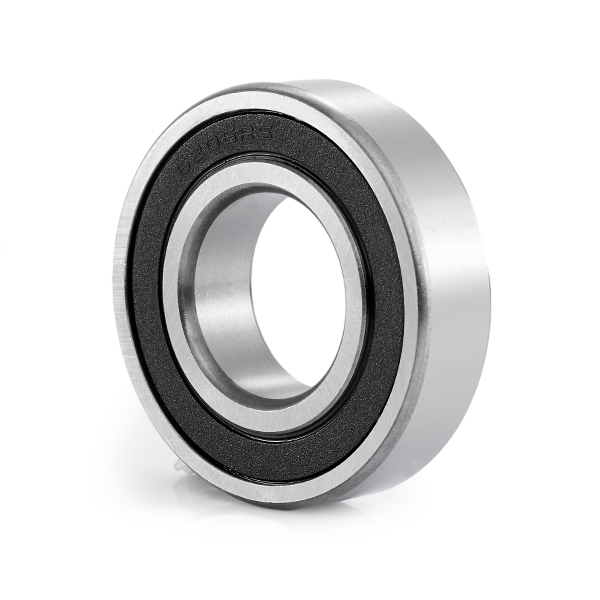 High-Speed Low-Friction Torque Deep Groove Ball BearingsThis bearing line combines ABEC 7 precision with a high-speed cage and low-friction torque design, making it suitable for spindle applications where tight tolerances and minimal heat generation are critical.View Product →
ABEC 7 is not a shortcut to better performance. A precision bearing demands a precision seating surface. Shaft out-of-roundness, an oversize housing bore, or surface scratches of the same order as the runout will transfer directly to the shaft center. In a repair environment, if the bearing seat is 0.005 mm out of round, that error swamps the 0.001 mm difference in runout between ABEC 5 and ABEC 7. Likewise, a single hard particle inside a tightened precision bearing can create a dent that generates more noise than the entire tolerance grade saves.
Cost is another practical issue. ABEC 7 units often cost 1.5 to 3 times as much as comparable ABEC 5 bearings, and lead times can be longer. That extra cost pays for inspection, sorting, and tighter process control; it does not pay for the ability to ignore poor shaft machining, contamination, or lubrication mistakes.
Use this short list to avoid both over-specifying and under-specifying:
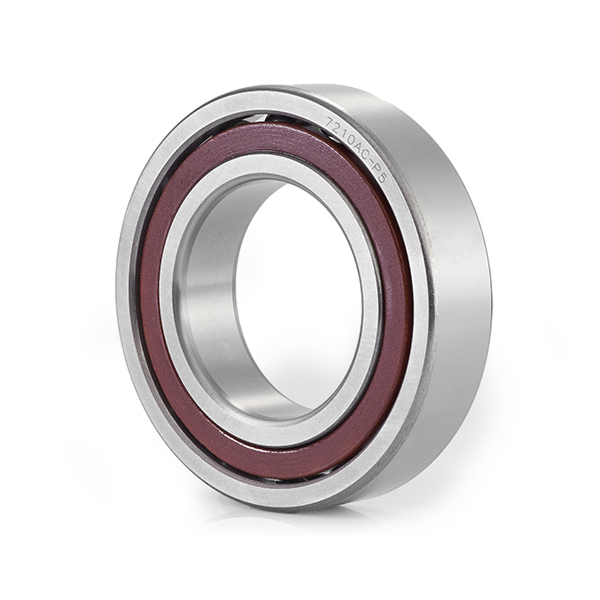
The bearing type and tolerance class should be selected together. For combined radial and axial loads, a single-row angular contact ball bearing provides a controlled contact angle and can be ordered in ABEC 5 or ABEC 7 grades. Choosing the right contact angle matters as much as the ABEC class.
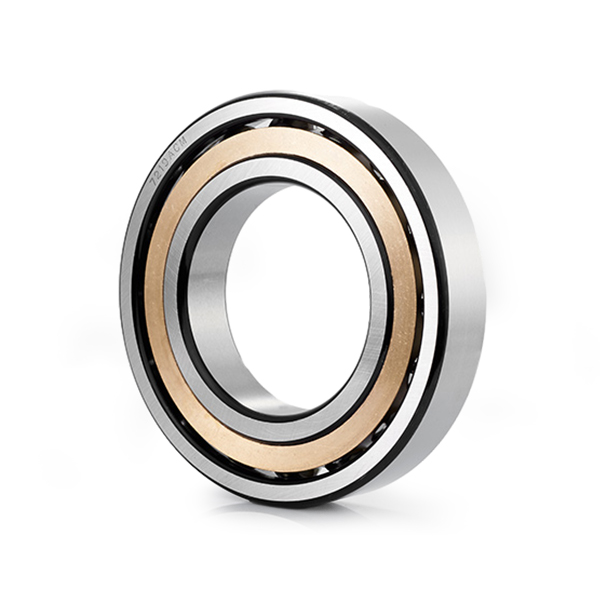 Single Row Angular Contact Ball Bearing with Adjustable Contact AngleOffered in ABEC 5 or ABEC 7 grades, this bearing supports combined radial and axial loads, making it ideal for spindles and precision instruments where contact angle selection is key.View Product →
In most cases, the final choice comes down to speed and runout. If the application is a pump, gearbox, conveyor, fan, or axle, ABEC 5 gives you reliable performance and better value. If it is a high-speed spindle or a precision instrument, ABEC 7 is a legitimate upgrade. Before making the final call, review our practical guidance on choosing suitable roller bearings and confirm the actual operating conditions.

Copyright © Ningbo Demy (D&M) Bearings Co., Ltd. All Rights Reserved.
 OEM/ODM Industrial Bearing Manufacturers

 Search
 EN
EN English
 Español