You have a shaft that carries heavy radial force, a constant axial load from the gear mesh, and little room for a complex mounting arrangement. A tapered roller bearing will often be the right answer because one row of tapered rollers can handle both load directions at the same time, which most cylindrical and ball bearings cannot do nearly as well. In practice, this is why tapered roller bearings are the standard on vehicle wheel hubs, gearboxes, and other drivetrain positions where space is tight and reliability matters. Their ability to be set with a chosen clearance or preload during assembly adds another degree of control that design engineers should use deliberately.
A tapered roller bearing consists of four basic elements: the outer ring, the inner ring, tapered rollers, and a cage. In bearing terminology, the outer ring is called the cup and the inner ring assembly (with rollers and cage) is called the cone. Both ring raceways are conical, and the rollers are arranged so that their axes converge to a single point on the bearing centerline. That convergence is not a mechanical detail for its own sake; it is what keeps the large-diameter end of each roller in contact with the cone rib, so the roller cannot slide sideways under axial load.
The geometry directly determines performance. A bearing with a smaller nominal contact angle gives better radial load capacity and allows higher speeds. A larger contact angle increases the axial thrust capacity of the same bearing envelope. For this reason, a heavy-duty gearbox bearing and an automotive wheel bearing may have identical boundary dimensions but different internal angles. When a single row can only carry axial load in one direction, two bearings are mounted face-to-face or back-to-back, or one double-row bearing is used.
Most bearing selection errors trace back to a simple mismatch: the bearing can handle the catalogue radial load but not the actual combined load with thrust present. A comparison of standard rolling element types makes the difference visible quickly.
| Bearing type | Radial load rating | Axial load rating | Combined load behaviour | Typical speed range |
|---|---|---|---|---|
| Deep groove ball bearing | Moderate | Moderate | Limited once axial share is high | High |
| Cylindrical roller bearing | High | None or low depending on rib design | Low | Very high |
| Spherical roller bearing | Very high | Moderate | Good for high radial with moderate axial | Medium |
| Tapered roller bearing | High | High in one direction per row | Excellent with matched pairs | Medium to high |
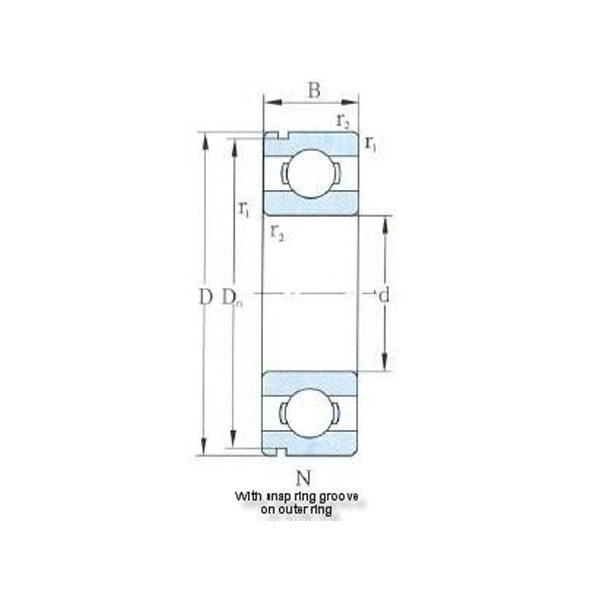
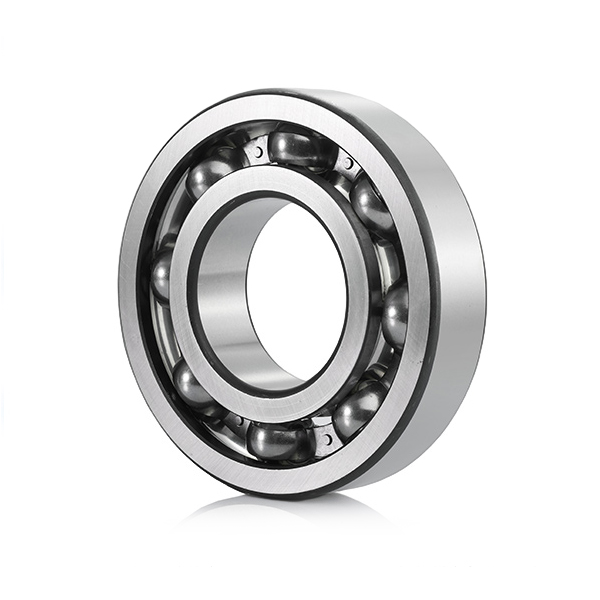
Deep groove ball bearings are economical and fast, but their axial load capacity is limited under heavy loads. Cylindrical roller bearings are excellent for pure radial loads and very high speeds, yet they do not locate a shaft axially unless a special ribbed design is used. Spherical roller bearings carry very high radial loads with moderate axial loads and tolerate shaft deflection, which makes them valuable in heavy industry. Tapered roller bearings sit in a different position: they combine high radial capacity with genuine thrust capacity in one row, so a compact arrangement can support a shaft that would otherwise need two different bearing types.
When the application is purely radial and very high speed, a single-row cylindrical roller bearing is often the faster alternative. When both radial and axial loads must be managed in one envelope, the tapered roller bearing is usually the better trade-off.
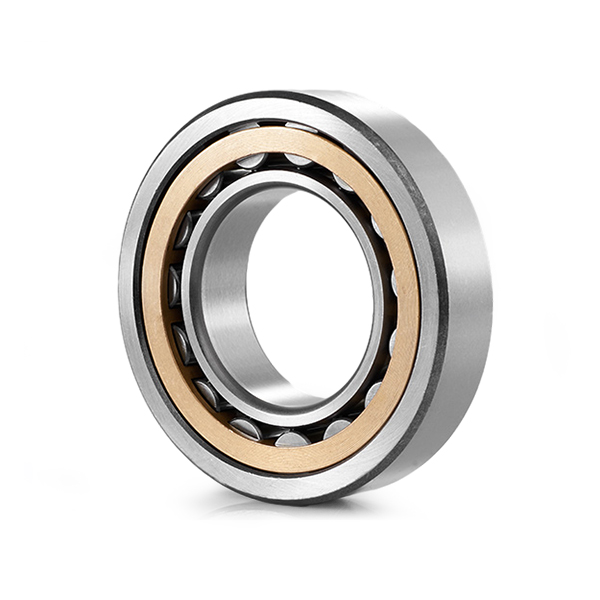 Wholesale Single row cylindrical roller bearing Suppliers, Manufacturers - NingbNingbo Demy (D&M) Bearings Co., Ltd. is China wholesale Single row cylindrical roller bearing suppliers and Single row cylindrical rolle...View Product →
This is the step that makes tapered roller bearings different at installation. A deep groove ball bearing comes out of the box with a fixed internal clearance. A tapered roller bearing does not: the internal clearance is established when the cone is positioned against the cup. The designer can specify any setting from a small negative clearance (preload) to a positive running clearance, and the same physical bearing can serve completely different applications depending on the setting.
A wheel hub, for instance, normally needs a slight preload. Under cornering loads, the outer ring tries to tilt, and without preload the rollers can skid rather than roll, generating heat and wear. A gearbox input shaft, by contrast, may run warm and expand axially; if the bearing was heavily preloaded at room temperature, that expansion can overload it. In that case the engineer specifies a running clearance so that thermal growth takes the bearing to the optimal condition.
This also explains why mounting quality matters. If the nut torque or press distance is wrong, the effective setting changes and the bearing may run noisy, hot, or short-lived. That is not a defect in the bearing; it is the result of an installation process that has to be executed precisely.
Selection starts with the service condition, not the catalogue. Define the loads, the speed, the operating temperature, and the contamination level, then compare candidate series using the manufacturer load ratings and a life calculation.
For a broader decision framework that covers different working conditions, see our guide on choosing suitable roller bearings.
Tapered roller bearings appear wherever shafts must be held rigidly under combined load. The most familiar example is a vehicle wheel hub. In trucks and vans, front and rear wheels are still frequently supported by a pair of tapered roller bearings, using a small preload to maintain rigidity. In many modern passenger cars, the same function has been integrated into a hub unit, which combines two rows of rolling elements, seals, and a fixing flange in a single serviceable part. If you maintain a fleet, replacing a complete replacement hub bearing instead of loose bearings clarifies the mounting process and often improves long-term reliability.
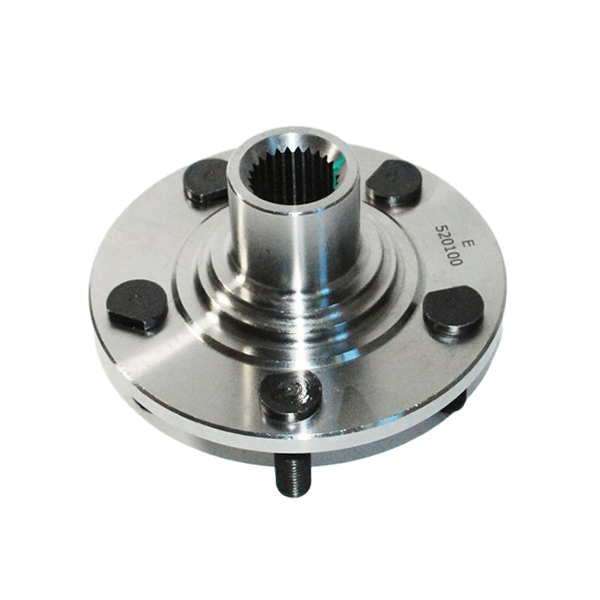 Wholesale Replacement Hub Bearing Suppliers, Manufacturers - Ningbo Demy (D&M) BNingbo Demy (D&M) Bearings Co., Ltd. is China wholesale Replacement Hub Bearing suppliers and Replacement Hub Bearing manufacturers,View Product →
Gearboxes and differentials are the second large group. Input shafts, output shafts, and pinion shafts are loaded radially from the gear mesh and axially from helical gear thrust. Tapered roller bearing pairs handle these loads while keeping the gear mesh aligned, which is critical for noise and wear. Construction machinery, agricultural equipment, and conveyor drives use them in wheel ends and transfer cases for the same reason: high load capacity in a small space with a predictable setting.
In engine and auxiliary drives, smaller tapered roller bearings appear in winches, agricultural implement shafts, and some industrial gear units. When a driven shaft has both belt tension (radial) and helical gear action (axial), a matched pair of tapered roller bearings is often the most straightforward solution.
Once the bearing design is fixed, the next risk is supplier quality. In tapered roller bearing manufacturing, the critical details are the taper angle consistency between cup and cone, raceway roundness, surface finish on the rib, and the hardness profile left by heat treatment. Small deviations in these parameters show up as noise, short grease life, or early spalling, not in the boundary dimensions.
A capable factory should be able to show the equipment behind these claims: automatic grinding lines, in-process gauging, and final inspection for vibration and geometry. In the automotive supply chain, a quality system such as ISO/TS 16949 is a meaningful signal because it forces consistent process documentation and corrective action. If you buy from a manufacturer that controls material traceability from incoming steel to finished packaging, you reduce the probability of batch failures that would otherwise surface in your own production line or in the customer's field.
For volume buyers, production capacity also matters. A supplier with over 20,000 square meters of manufacturing space, automated machining and assembly lines, and a broad catalogue of bearing types is easier to work with when demand fluctuates. That kind of manufacturer can support the mix of prototype and serial orders that automotive and industrial customers typically place.
When you choose a tapered roller bearing, three decisions determine the result: the correct internal geometry for the load condition, the correct setting at installation, and the process quality of the manufacturer. None of them should be taken for granted from a datasheet. Start by defining the radial and axial loads on the bearing, use the manufacturer load ratings and life calculation to choose the series, and then validate the supplier process capability. If you need support with a specific application, a bearing manufacturer that builds both industrial and automotive product lines can normally help you match the bearing to the real working condition.

Copyright © Ningbo Demy (D&M) Bearings Co., Ltd. All Rights Reserved.
 OEM/ODM Industrial Bearing Manufacturers

 Search
 EN
EN English
 Español