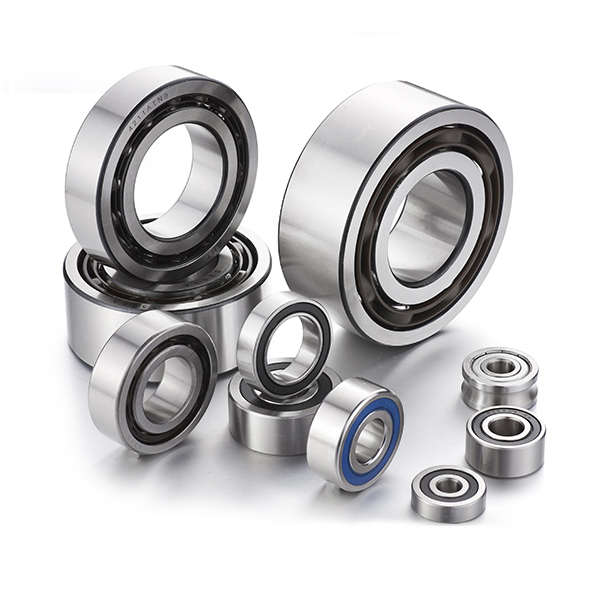
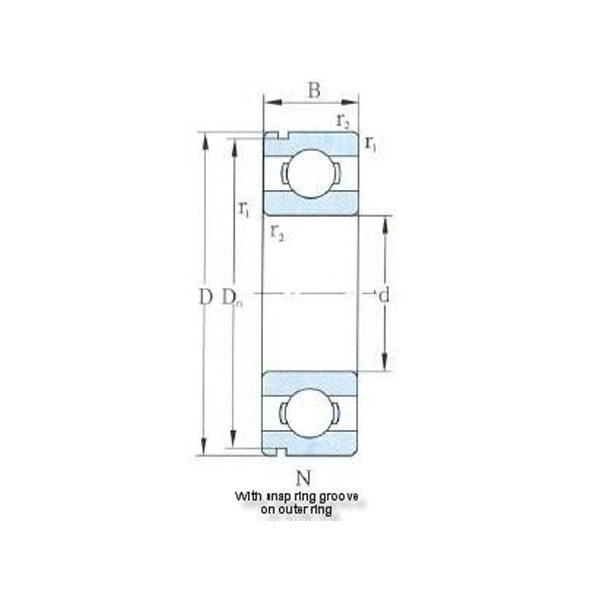
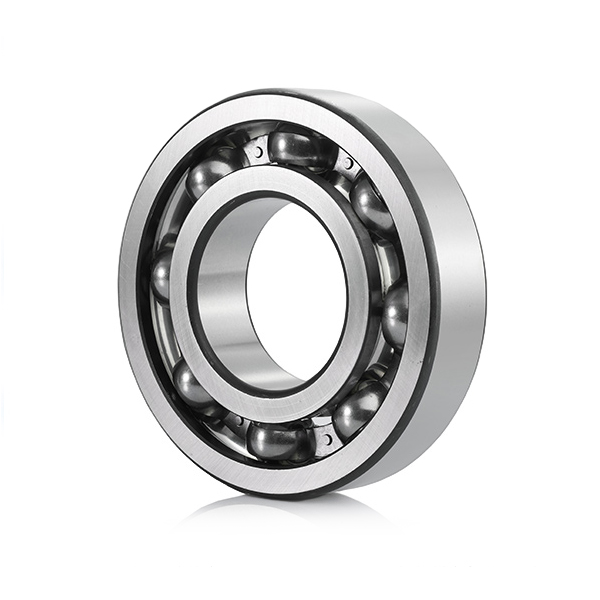
For applications requiring high-speed operation with combined radial and axial loads, deep groove ball bearings are the most widely used rolling element bearing, accounting for approximately 70% of all bearing applications in electric motors, pumps, gearboxes, and conveyors. The direct conclusion: select deep groove ball bearings based on dynamic load rating (C, in kN), static load rating (C0, in kN), speed limit (grease or oil lubrication), and internal clearance (C2, CN, C3, C4). A bearing with insufficient dynamic load rating will fatigue prematurely (L10 life below 10,000 hours); a bearing with excessive clearance will generate noise, vibration, and reduced positioning accuracy.
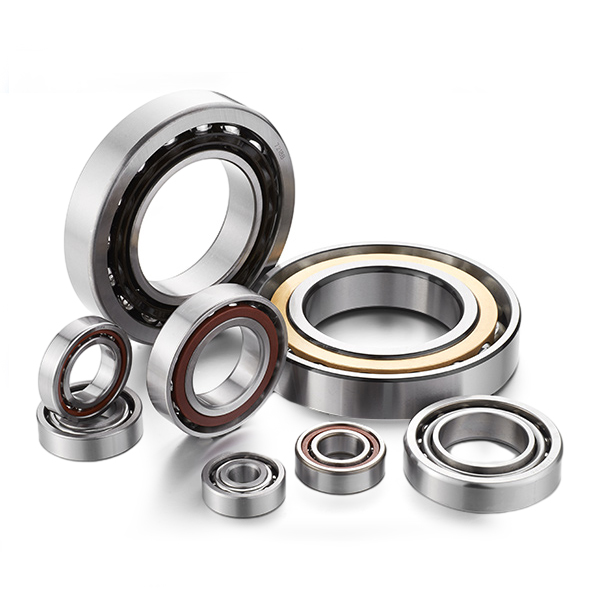
Deep groove ball bearings consist of an inner ring, outer ring, a cage (retainer), and a set of balls that roll in deep raceway grooves. The "deep groove" refers to the raceway geometry where the groove radius is only slightly larger (typically 52% of ball diameter) than the ball itself, creating a conformal contact that distributes stress over a larger area. This design allows the bearing to accommodate significant radial loads (primary), moderate axial (thrust) loads in both directions (secondary), and combined loads simultaneously. The contact angle under axial load is typically 5-15 degrees, depending on the axial load magnitude.
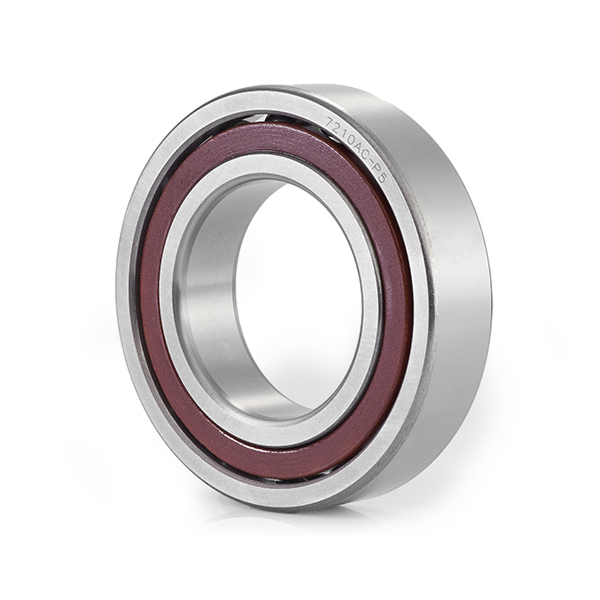
Load ratio guidelines: For optimal life, the ratio of axial load to radial load (Fa/Fr) should not exceed 0.5 for standard deep groove ball bearings. If Fa/Fr exceeds 0.5, consider angular contact ball bearings (higher axial capacity) or increase the bearing size. For pure axial load only (Fr=0), deep groove ball bearings can handle axial loads up to 50% of the static load rating, but life will be reduced because the balls contact the raceway shoulder edges, creating stress risers. For applications with significant axial loads (e.g., vertical shaft pumps, thrust applications), angular contact bearings are preferred.
\-| Bearing No. | Bore (mm) | OD (mm) | Dynamic C (kN) | Static C0 (kN) | Max Speed (rpm, grease) |
|---|---|---|---|---|---|
| 6200\- | 10\- | 30\- | 4.0\- | 2.0\- | 22,000\- |
| 6201\- | 12\- | 32\- | 5.5\- | 2.8\- | 20,000\- |
| 6202\- | 15\- | 35\- | 7.0\- | 3.8\- | 18,000\- |
| 6203\- | 17\- | 40\- | 8.5\- | 4.5\- | 16,000\- |
| 6204\- | 20\- | 47\- | 12.0\- | 6.5\- | 14,000\- |
| 6205\- | 25\- | 52\- | 14.0\- | 7.8\- | 12,000\- |
The dynamic load rating (C) is the constant radial load that 90% of a group of identical bearings (L10 life) can endure for 1 million revolutions (approximately 500 hours at 3,330 RPM). The basic L10 life formula: L10 = (C / P)^3 × 1,000,000 revolutions, where P is the equivalent dynamic bearing load. For a bearing with C = 14 kN and applied load P = 2 kN, L10 = (14/2)^3 × 10^6 = 7^3 × 10^6 = 343 × 10^6 revolutions. At 3,000 RPM, this is 343,000,000 / (3,000 × 60) = 1,905 hours. For most industrial applications, the minimum acceptable L10 life is 10,000-20,000 hours (1-2 years of continuous operation). For critical applications (pumps, fans, conveyors), specify L10 of 50,000+ hours.
Adjusting for reliability (non-standard L10): For 95% reliability (L5), multiply L10 by 0.62; for 99% reliability (L1), multiply by 0.21. For a bearing with L10 = 20,000 hours, L1 = 4,200 hours (meaning 1% of bearings will fail before 4,200 hours). For applications where failure is catastrophic (medical devices, aircraft, elevators), design for L1 life, not L10. For standard industrial machinery, L10 is sufficient. Also apply application factors (a2 for lubrication, a3 for contamination) per ISO 281; a clean, well-lubricated bearing achieves a2 = a3 = 1.0; a bearing with marginal lubrication or contamination may have factors of 0.3-0.5, reducing effective life by 50-70%.
The static load rating (C0) is the load at which permanent deformation of the balls and raceways reaches 0.0001 times the ball diameter (typically 0.1-0.2 microns for a 10mm ball). For smooth, quiet operation, the applied static load (including shock loads) should not exceed 50% of C0. For applications with intermittent operation or low-speed oscillation (under 10 RPM), the static load may approach 100% of C0, but audible noise and vibration will increase. For a bearing with C0 = 7.8 kN, the maximum recommended static load for smooth operation is 3.9 kN (approximately 400 kg). Exceeding this causes Brinelling (permanent indentations) that generate vibration and reduce life.
Shock loads are particularly damaging. A 5 kN static load applied gradually causes negligible damage; the same 5 kN load applied as a 1-millisecond impact (hammer blow) generates instantaneous stress 10-20x higher, permanently deforming the raceway. For applications with shock loads (conveyors, crushers, material handling), select a bearing with static load rating at least 10x the calculated steady-state load. Also specify deep groove ball bearings with larger ball sizes (6000 series vs. 6200 series for the same bore) because larger balls distribute impact stress over a larger area, reducing Brinelling risk.
Internal clearance (radial play) is the total distance the inner ring can move radially relative to the outer ring under no load. Clearance classes: C2 (smaller than normal), CN (normal, most common), C3 (larger than normal), C4 (larger than C3). Selecting the correct clearance is critical because temperature gradients and interference fits reduce installed clearance. For most applications with operating temperatures below 80°C and steel shaft/housing, CN clearance is sufficient. For high-temperature applications (above 100°C), the inner ring expands faster than the outer ring, reducing clearance; specify C3 or C4 depending on temperature. For thin-walled housings (plastic or aluminum) where housing expansion exceeds shaft expansion, specify C2 clearance.
A rule of thumb for clearance selection: For a temperature differential (ΔT) between inner ring and outer ring of 30°C, clearance reduction is approximately 0.003mm per 10mm of bearing bore. For a 6205 bearing (25mm bore), ΔT = 30°C reduces radial clearance by 25 × 0.000011 × 30 = 0.0083mm (approximately 8 microns). If initial clearance (CN for 6205) is 5-15 microns, the bearing may run with negative clearance (preload) at temperature, causing overheating and early failure. For ΔT > 30°C, specify C3 clearance (15-25 microns for 6205). For ΔT > 60°C, specify C4 (25-35 microns). Measure actual operating temperature after installation before final clearance selection for critical applications.
Deep groove ball bearings have speed limits determined by cage design, lubrication method, and heat generation. For grease lubrication, the speed limit (n) is typically 60-80% of the oil-lubricated limit. The speed factor (dn value = bearing bore in mm × RPM) is a standard comparison metric. For grease-lubricated steel bearings with stamped steel cages, maximum dn is approximately 300,000-400,000. For a 25mm bore bearing, this corresponds to 12,000-16,000 RPM maximum. For oil-lubricated bearings with machined brass or polyamide cages, dn can reach 600,000-800,000.
Lubricant selection: For operating temperatures -20 to +80°C, standard lithium-based NLGI grade 2 grease (ISO VG 150-220 base oil) is suitable. For high temperatures (80-120°C), specify polyurea or PTFE-thickened grease with synthetic oil (PAO or ester). For low temperatures (below -20°C), specify low-viscosity grease (NLGI grade 1 or 0) with synthetic base oil. Grease fill: for sealed bearings (2RS or 2Z), the manufacturer fills 25-35% of the free space; for relubricatable bearings (open), fill to 30-50% of the free space at initial lubrication, then relubricate every 500-2,000 hours depending on operating conditions. Over-greasing (fill over 60%) causes churning, overheating, and grease degradation.
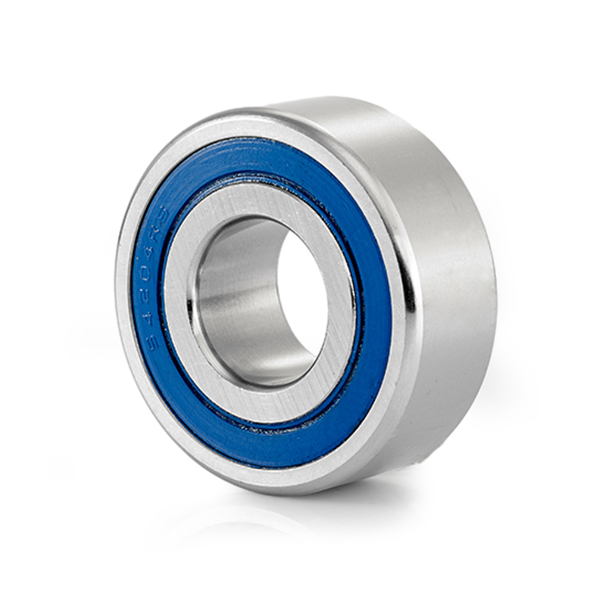
Deep groove ball bearings are available with shields (Z or ZZ) or contact seals (RS or 2RS). Shields (metal) provide protection against large debris while allowing some grease escape and negligible friction increase (5-10% higher torque than open). Shields are suitable for clean environments where occasional lubricant exchange is required (e.g., electric motors). Seals (rubber, typically nitrile or fluoroelastomer) provide contact sealing against dust and moisture but increase friction torque by 50-100% and reduce speed limits by 20-30%. For dirty environments (sawmills, construction equipment, food processing), specify 2RS (double seal). For washdown applications (food processing, car washes), specify 2RS with stainless steel bearing (martensitic or 440C grade) to prevent rust.
Seal temperature limits: Nitrile rubber (standard) seals are rated to 100°C; fluoroelastomer (Viton) seals to 200°C. For high-temperature applications (ovens, dryers, furnaces), specify Viton seals. For vacuum applications (below 10⁻³ mbar), specify shielded bearings (not sealed) because seals outgas and fail to seal under vacuum. For bearings exposed to water or steam, specify sealed bearings with water-resistant grease (calcium sulfonate or aluminum complex). Field data shows that sealed bearings in wet environments last 3-5x longer than shielded bearings because seals prevent water ingress, which causes corrosion and lubricant washout.
The standard material for deep groove ball bearing rings and balls is SAE 52100 chrome steel (high-carbon chromium alloy steel). 52100 steel has hardness of 60-64 HRC, excellent rolling contact fatigue strength, and moderate corrosion resistance. For applications requiring corrosion resistance (food processing, marine, chemical), specify AISI 440C stainless steel (hardness 58-60 HRC) for rings and balls. 440C stainless has 70-80% of the load capacity of 52100 but adequate for most applications. For extreme corrosion resistance (salt water, acid solutions), specify 316 stainless rings with silicon nitride (ceramic) balls; this hybrid bearing is non-magnetic and completely corrosion-resistant but costs 5-10x standard steel.
Hybrid bearings (steel rings, ceramic balls) offer higher speed capability (ceramic balls are lighter, reducing centrifugal force) and electrical insulation. Silicon nitride (Si3N4) ceramic balls have 60% lower density than steel, allowing 30-50% higher speed limits. Hybrid bearings also prevent electrical fluting damage in electric motors (ceramic balls are non-conductive). For variable frequency drive (VFD) motors, specify hybrid deep groove ball bearings to prevent bearing currents that cause fluting (washboard pattern on raceways). In VFD motors without hybrid bearings, bearing failure occurs in 6-18 months; hybrid bearings last 5-10 years.
The cage separates the balls, guides them through the load zone, and prevents ball-to-ball contact. Stamped steel cages (riveted or snapped) are standard for 70-80% of deep groove ball bearings. They are economical, strong, and operate at temperatures up to 150°C. However, they have limited speed capability (dn = 300,000 max) and are not recommended for extremely high speeds or vibrations. Machined brass cages (two-piece riveted) are used for high-speed applications (dn = 600,000+), high temperatures (300°C), and severe vibration environments. Brass cages cost 3-5x steel cages but provide 30-50% higher speed limits and longer life under poor lubrication conditions.
Polyamide (nylon) cages are lightweight, have excellent high-speed characteristics, and quiet operation. Polyamide cages are standard for small and medium-sized bearings (bore under 100mm) used in electric motors and household appliances. However, polyamide degrades above 120°C and is attacked by certain lubricants (aggressive EP additives). For temperatures above 100°C or with extreme pressure lubricants, specify brass or steel cages. For vacuum applications, polyamide outgasses and becomes brittle; specify steel or brass. For medical and food processing applications where lubricant compatibility is critical, polyamide is acceptable if the specific lubricant has been tested.
Correct shaft and housing fits are essential for proper bearing operation. For rotating inner ring loads (most applications), the shaft should have an interference fit (shaft tolerance k5, k6, or m6) to prevent creep (rotation on the shaft). For a 25mm shaft, k6 tolerance provides 2-15 microns interference, adequate for most applications. The housing should have a clearance fit (H7 tolerance) to allow axial movement for thermal expansion. For rotating outer ring loads (eccentric shafts, unbalanced loads), the housing should have an interference fit (P7 or N7) and the shaft a clearance fit (h6). The wrong fit selection causes fretting corrosion (loose fit) or excessive preload (tight fit).
Measure fits with micrometers, not calipers. For a 25mm shaft, the difference between k6 (maximum 25.015mm, minimum 25.002mm) and h6 (maximum 25.000mm, minimum 24.987mm) is 15-28 microns—easily measured with a micrometer but at the limit of caliper accuracy. Inspect the shaft for nicks, burrs, or scratches before installation; any defect over 5 microns high will indent the bearing bore and affect running accuracy. For aluminum or plastic housings, use adhesive bonding (retaining compound) instead of interference fits because the housing would deform under interference.
Never hammer a bearing onto a shaft—impact loading Brinells the raceways. Use mechanical presses (for small bearings up to 40mm bore) or thermal expansion (for larger bearings). For thermal installation, heat the bearing to 80-100°C (not exceeding 120°C) using an induction heater or oil bath. Heating expands the inner ring, allowing slip-fit onto the shaft. For shaft mounting, heat the bearing and slide it onto the shaft until seated. For housing mounting, cool the bearing (dry ice or freezer at -40°C) to shrink the outer ring, then drop into the housing. Never heat a sealed or shielded bearing above 80°C—the seals or grease will be damaged.
Apply force only to the ring being mounted. When mounting on a shaft, apply force to the inner ring only; pressing on the outer ring transfers force through the balls, denting the raceways. When mounting in a housing, apply force to the outer ring only. Use mounting sleeves or soft metal tools (brass or aluminum) to avoid damaging the bearing surfaces. After installation, rotate the bearing by hand; it should turn smoothly with no notchiness (rough spots) or binding (excessive resistance). Notchiness indicates Brinelling from improper mounting; binding indicates incorrect clearance or misalignment.
For relubricatable (open) deep groove ball bearings, regreasing intervals depend on operating conditions. For normal conditions (temperature 40-70°C, clean environment, horizontal shaft), regrease every 2,000-4,000 hours or every 6 months. For severe conditions (temperature >80°C, high humidity, contamination, vertical shaft), regrease every 500-1,000 hours or monthly. For electric motors (continuous operation, 40-60°C), regrease every 3,000-5,000 hours (4-6 months). For fans and blowers (light loads, clean air), regrease every 4,000-8,000 hours. For pumps (clean water, 20-40°C), regrease every 2,000-4,000 hours.
Grease quantity: For a 6205 bearing (47mm OD, 25mm ID), add 1.5-2.5 grams of grease during regreasing. Too little grease (under 1g) causes starvation and rapid wear; too much (over 5g) causes churning, overheating, and grease leakage. For bearings with a grease fitting (zerk fitting), pump slowly (1 pump per second) until clean grease appears at the seals or a slight resistance is felt. For bearings without fittings, disassemble to regrease—not practical; specify sealed bearings (2RS) and replace the bearing when the grease degrades.
Deep groove ball bearing failures can be diagnosed by visual inspection. Flaking (spalling) of raceways: classic fatigue failure; indicates L10 life exceeded or load exceeded design. Brinelling (indentations spaced at ball pitch): caused by shock loads or hammering during installation. Smearing (welding between balls and raceways): inadequate lubrication or excessive speed. False brinelling (shallow wear marks at ball positions): vibration while stationary (transported machinery). Discoloration (blue/brown rings on rings/balls): overheating (>150°C), often due to high speed, low lubricant, or excessive preload.
Corrosion (red/brown rust): moisture ingress; improve sealing or use stainless bearings. Electrical fluting (washboard pattern on raceways with a frosted appearance): electrical current passage; use hybrid bearings or insulated bearings. Cage damage (cracked or broken cage): excessive vibration, speed beyond cage limits, or lubricant starvation causing impact loading. For each failure mode, identify root cause before replacing the bearing; installing a new bearing in the same conditions reproduces the failure. For critical equipment, send failed bearings to a laboratory for analysis (SEM/EDX for contamination identification, metallurgical sectioning for subsurface fatigue).

Copyright © Ningbo Demy (D&M) Bearings Co., Ltd. All Rights Reserved.
 OEM/ODM Industrial Bearing Manufacturers

 Search
 EN
EN English
 Español