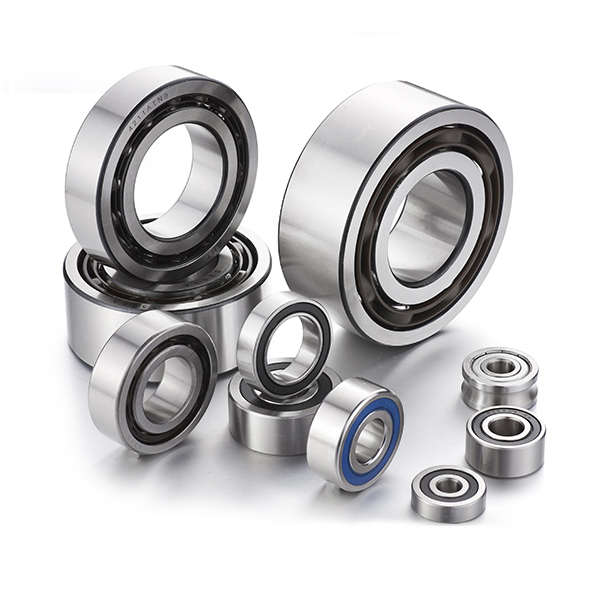
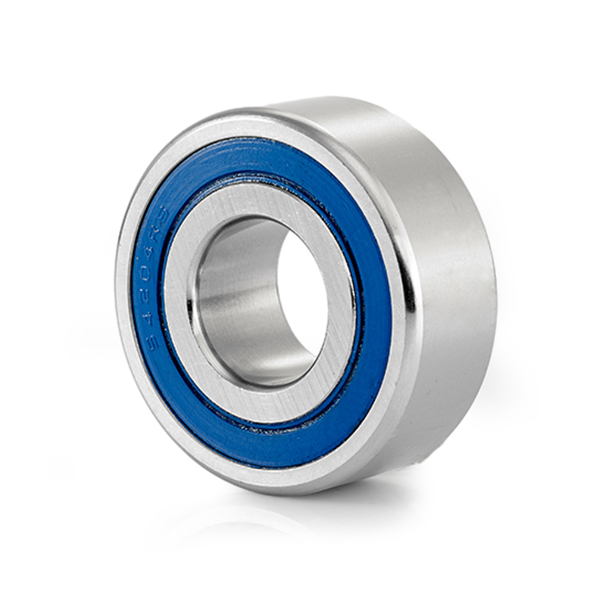
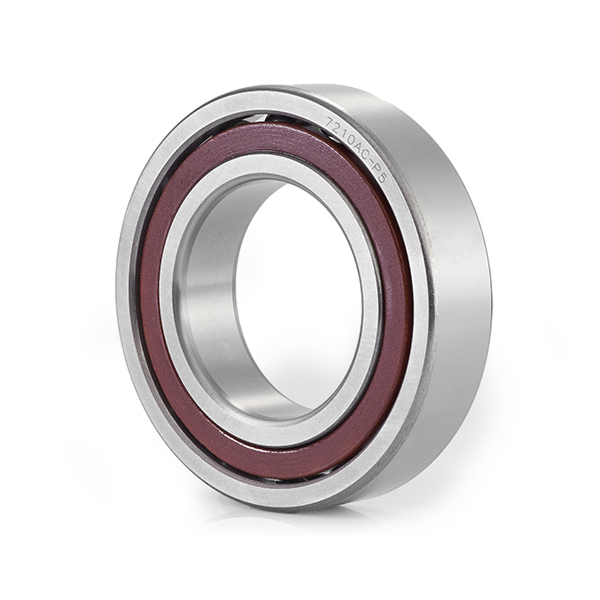
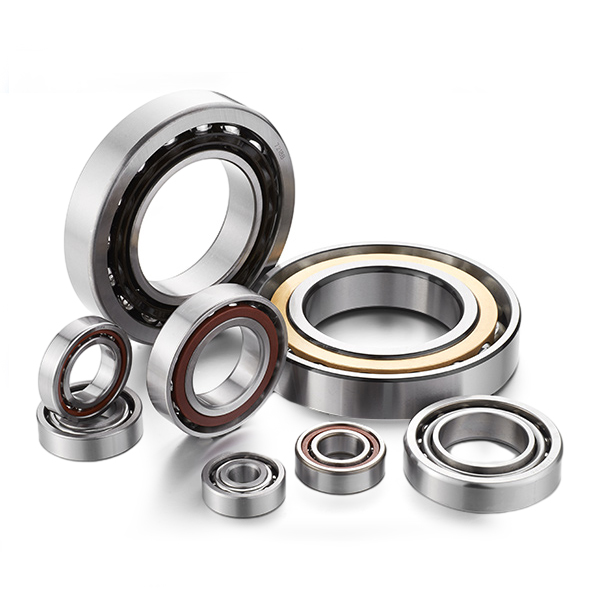
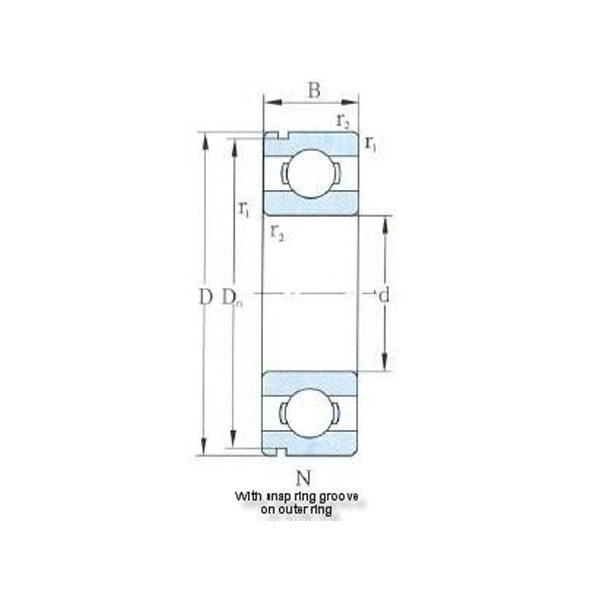
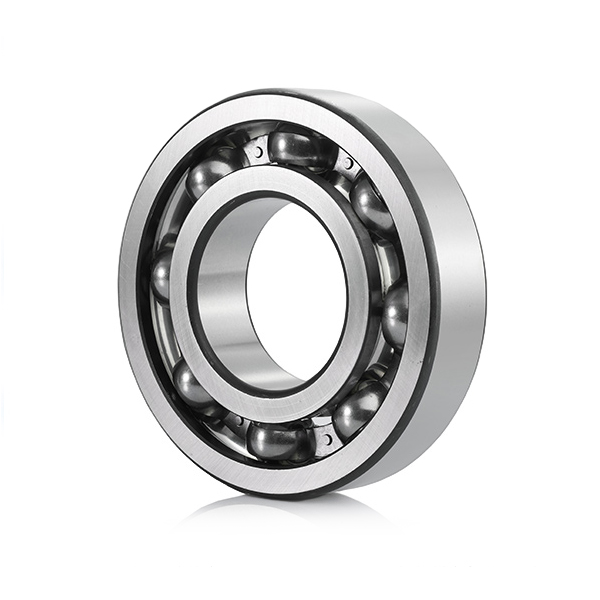
Self-aligning ball bearings use a spherical raceway in the outer ring, allowing the inner ring, balls, and cage to pivot around the bearing's center point and automatically compensate for shaft misalignment, typically up to 2.5 to 3 degrees depending on the design. Double-row versions handle heavier radial loads than single-row types, while both share the same core advantage: tolerating shaft deflection and housing misalignment without the premature wear that rigid bearings experience under the same conditions.
Both configurations share the defining spherical outer raceway that gives self-aligning ball bearings their name, but they differ in load capacity and typical application. Single-row designs use one row of balls between the inner and outer rings, prioritizing compactness and lower cost. Double-row designs stack two rows of balls side by side within the same spherical outer raceway, roughly doubling radial load capacity while retaining the same self-aligning capability.
The defining feature of self-aligning ball bearings is the spherical shape ground into the outer ring's raceway. Unlike a standard deep groove ball bearing, where the outer ring raceway is a straight cylindrical path, the spherical geometry allows the entire inner assembly to tilt around the bearing's center point. This means the inner ring can follow shaft deflection or angular misalignment between the shaft and housing without transferring that misalignment stress into the balls and raceways as uneven wear.
| Bearing Type | Misalignment Tolerance | Typical Cause of Misalignment |
| Self-aligning ball bearing | Up to 2.5–3 degrees | Shaft deflection, housing bore misalignment, thermal expansion |
| Standard deep groove ball bearing | Minimal, typically under 0.1 degrees | Requires precise shaft and housing alignment |
| Spherical roller bearing | Up to 2–2.5 degrees | Heavy-load applications with similar misalignment needs |
Radial and axial load capacity varies significantly between single-row and double-row self-aligning ball bearings, and matching the right configuration to actual operating loads prevents both premature failure from underrating and unnecessary cost from overrating.
The cage, which holds the balls in position and maintains even spacing around the raceway, comes in several material options that affect maximum operating speed and durability under different conditions.
| Cage Material | Speed Capability | Best Suited Environment |
| Pressed steel | Moderate | General industrial applications, cost-sensitive projects |
| Machined brass | Higher | Higher-speed applications, better shock resistance |
| Polymer (nylon or similar) | Moderate to high | Lower-noise applications, resistant to certain lubricant chemistries |
Contamination protection matters significantly for self-aligning ball bearings used in dusty, wet, or otherwise harsh environments, since even a well-designed bearing fails quickly once contaminants reach the raceway and balls.
Precision class defines the manufacturing tolerance on dimensions like bore diameter, outer diameter, and running accuracy, which becomes increasingly important as operating speed and application criticality increase.
| Precision Class | Typical Tolerance Level | Common Application |
| P0 (normal) | Standard tolerance | General industrial machinery, conveyors, agricultural equipment |
| P6 | Improved tolerance | Machine tools, pumps, moderate-precision rotating equipment |
| P5 and higher | Tight tolerance | High-speed spindles, precision instrumentation |
Procurement teams sourcing self-aligning ball bearings for ongoing production equipment or critical rotating machinery typically weigh several factors beyond the base catalog specification.
Suppliers who provide material test reports and consistent dimensional tolerances across production runs reduce the risk of intermittent failures across a large installed base of bearings.
Bearings pre-packed with high-temperature or extended-life grease reduce maintenance frequency in hard-to-access installations, lowering total cost of ownership over the bearing's service life.
Black oxide or specialized coatings extend service life in humid or washdown environments where standard bearing finishes would corrode prematurely.
For critical rotating equipment, unplanned downtime waiting on a replacement bearing often costs far more than the bearing itself, making supplier lead time a real evaluation factor.
Even a well-selected self-aligning ball bearing can fail prematurely if installed incorrectly, since several common mistakes undermine the very misalignment tolerance the design is meant to provide.
Routine inspection intervals for self-aligning ball bearings depend heavily on operating speed, load, and environmental exposure, but a few general practices apply across most industrial applications.
| Maintenance Task | Recommended Frequency |
| Vibration monitoring | Monthly for critical equipment, quarterly for general use |
| Grease replenishment | Per manufacturer schedule, typically every 6–12 months for standard duty |
| Seal inspection for wear or damage | Every 6 months in harsh environments |
| Full bearing replacement | Based on calculated fatigue life or observed vibration/noise increase |
Self-aligning ball bearings are used in applications where shaft deflection or housing misalignment is expected, such as long conveyor shafts and agricultural equipment, since their spherical outer raceway allows the bearing to compensate for misalignment without excess wear.
Most self-aligning ball bearings tolerate up to 2.5 to 3 degrees of angular misalignment between the shaft and housing, significantly more than standard deep groove ball bearings.
Single-row bearings suit lighter-duty applications with lower radial loads, while double-row bearings offer roughly double the radial load capacity for heavier machinery and higher-load shafts.
Self-aligning ball bearings generally handle lower axial loads compared to radial loads, so applications with dominant axial thrust may require a different bearing type designed specifically for that load direction.
Sealed bearings with rubber or synthetic seals offer the highest contamination resistance and are typically recommended for outdoor, agricultural, or washdown environments where dust and moisture ingress are ongoing concerns.

Copyright © Ningbo Demy (D&M) Bearings Co., Ltd. All Rights Reserved.
 OEM/ODM Industrial Bearing Manufacturers

 Search
 EN
EN English
 Español