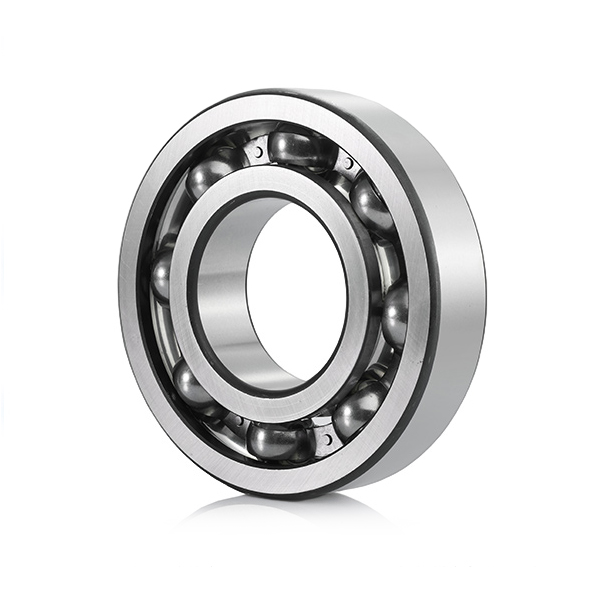
At 12,000 rpm, a spindle bearing can fail from a grease that worked perfectly at 3,000 rpm. The difference is not brand loyalty; it is heat, churning, and base-oil film. For high speed bearing grease, the practical rule is simple: select a low-churning grease that still carries a film at the bearing's real operating temperature, then confirm fill volume and relubrication interval with the bearing maker. A grease that is too stiff, or a bearing that is overfilled, will raise torque and temperature before the bearing reaches its rated speed.
High-speed performance is therefore a system result. The grease, bearing internal design, fill amount, and operating temperature all move the limit in the same direction.
Grease in a high-speed bearing is not a static paste. It is pushed toward the raceway shoulders, worked by the rolling elements, and sheared in the cage pocket. The grease must maintain an oil film, resist oxidation, stay in place without churning, and release oil at a controlled rate. When those jobs conflict, the bearing usually shows it as a temperature rise, not an immediate noise.
A grease approved for a general electric motor may be too viscous or too stiff for a machine-tool spindle. The usable window is narrow, and it should be checked against the bearing maker's speed limit and the application's thermal profile.
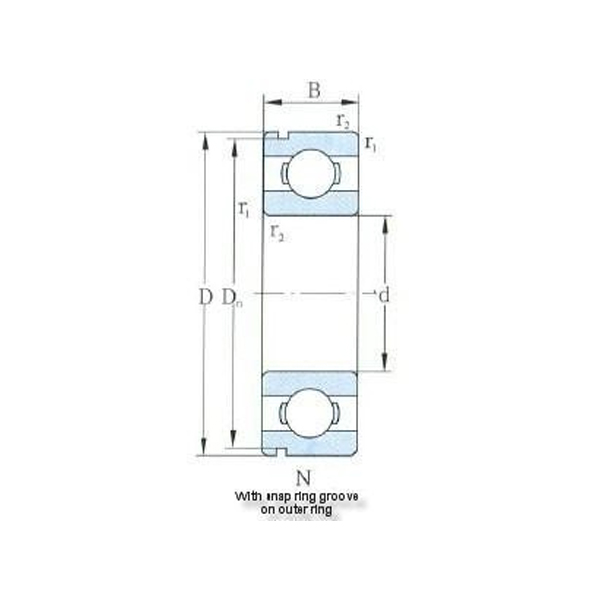
Use speed factor, usually written n·dm, where n is rotational speed in rpm and dm is bearing mean diameter in millimeters. A 30 mm bore deep groove ball bearing running at 10,000 rpm with a mean diameter near 45 mm gives about 450,000 mm/min. That is already high-speed territory for grease. At 20,000 rpm, the same bearing reaches about 900,000 mm/min and needs a different grease, a reduced fill, and often a different bearing design.
| Selection variable | Practical target at high speed | Why it matters |
|---|---|---|
| Speed factor n·dm | Check the bearing maker's grease limit; above roughly 500,000 mm/min, review grease and fill carefully | Heat, churning, and grease migration |
| Base-oil viscosity | Low enough to limit drag, high enough for film at operating temperature; often ISO VG 32–68, but verify | Film thickness versus friction loss |
| NLGI grade | Usually NLGI 1 or 2; softer grease may channel better but can leak | Pumpability, stay-put, and starting torque |
| Thickener compatibility | Confirm before relubrication or mixing | Incompatible greases can soften or harden |
The table is a review checklist, not a specification. The bearing maker's published limit and the measured operating temperature should override a catalogue headline.
High-speed greases commonly use synthetic base oils such as PAO, ester, or a PAO/ester blend. Esters can offer good film strength and low volatility; PAO offers good oxidation stability and cost control. The useful number is the base-oil viscosity at the bearing's operating temperature, not only the ISO grade on the label. A grease that is too thin at 100°C may lose film; one that is too thick at start-up may skid or churn.
Thickener choice matters as much as base oil. Lithium complex, polyurea, and calcium sulfonate complex greases are common, but they are not interchangeable without checking compatibility. NLGI 1 or 2 is typical for high-speed bearings. NLGI 0 may suit a central lubrication system, but it can leak from an open high-speed housing. Mechanical stability and low oil separation are also practical purchase criteria: a grease that bleeds heavily in storage may starve the bearing or deposit oil where it is not wanted.
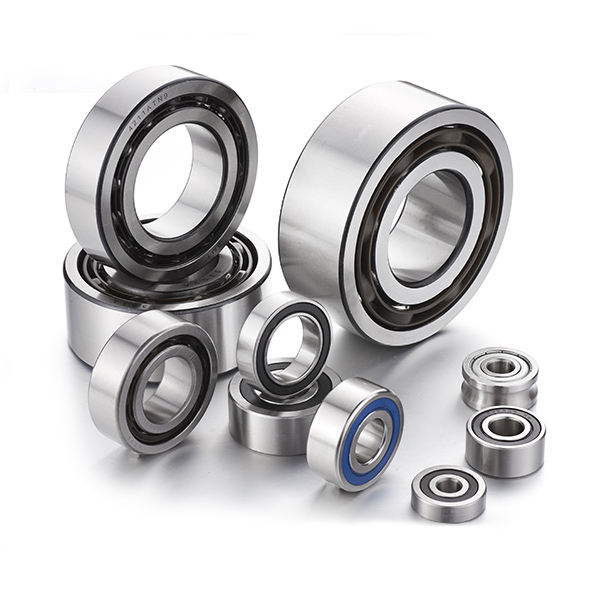
Grease cannot compensate for a bearing that is wrong for the speed. A standard deep groove ball bearing with tight clearance and a high-friction seal will run hotter than a high-speed low-friction torque design. For spindle and high-speed motor duties, review internal geometry, cage material, clearance, and seal or shield choice before finalizing the grease.
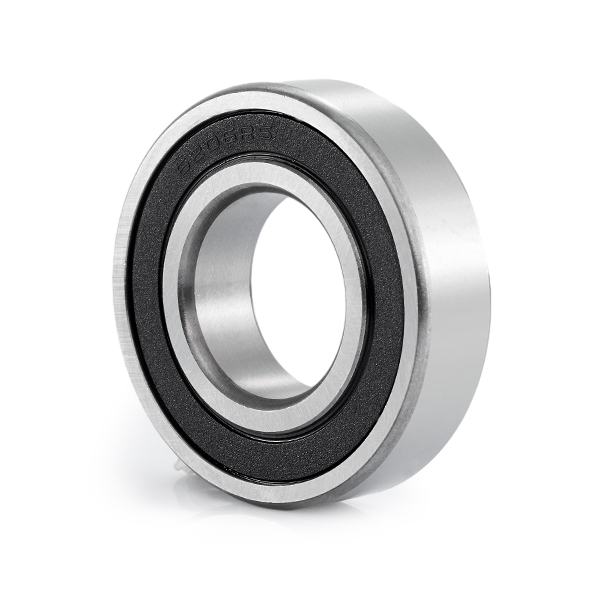 High-Speed Low-Friction Torque Deep Groove Ball BearingsFor spindle and high-speed motor duties, this deep groove ball bearing range covers multiple precision, seal, and material options.View Product →
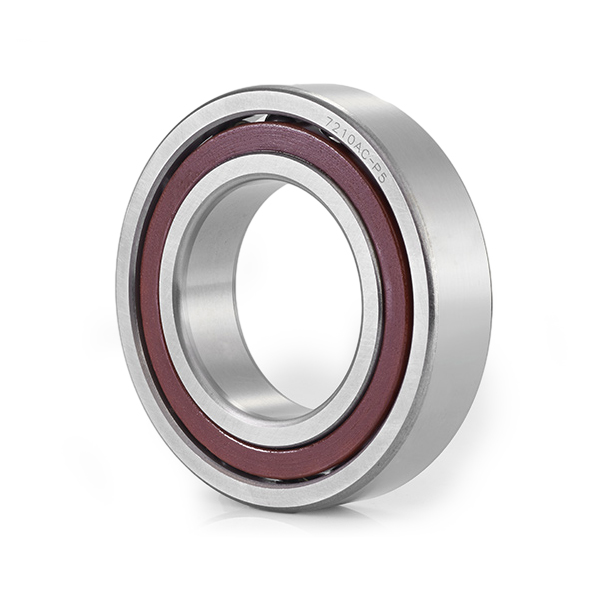
High-speed low-friction torque deep groove ball bearings are a sensible starting point when the duty is mainly radial with light axial load. Where the application combines radial and axial load, a single-row angular contact bearing may be more appropriate; contact angle and preload decide how the grease film is loaded.
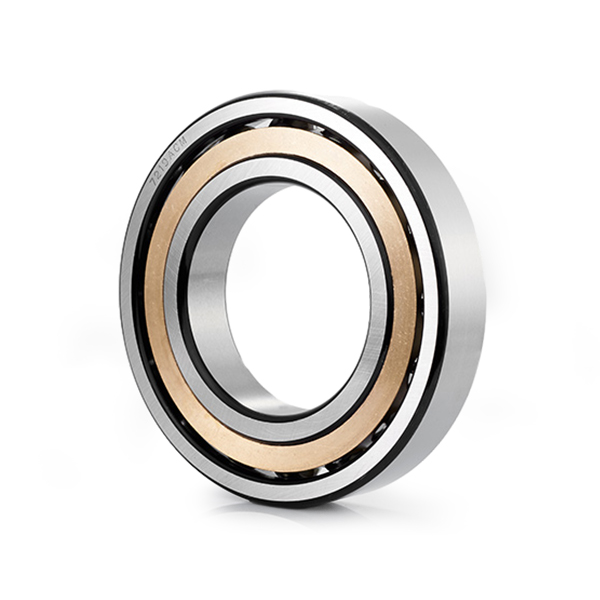 Single-Row Angular Contact Ball BearingsFor combined radial and axial loads in one direction, these single-row angular contact bearings suit motors, pumps, fans, and compressors.View Product →
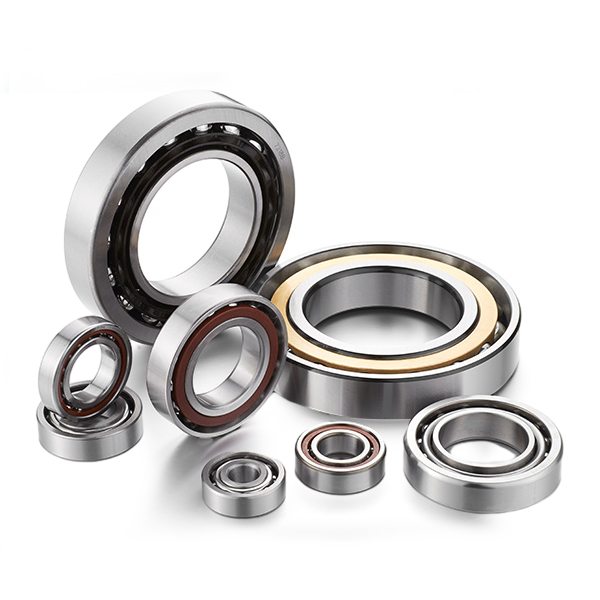
Double-row angular contact bearings can carry combined loads in a compact envelope, but higher speed usually demands tighter control of fill volume and heat. The grease choice should follow the bearing design, not the other way around.
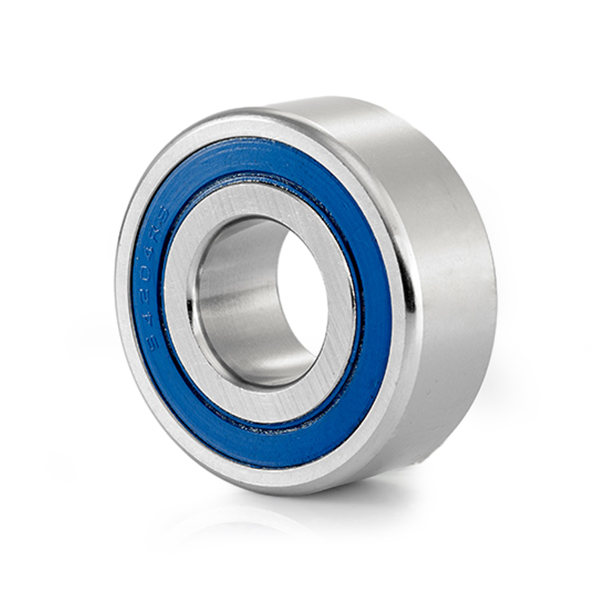 Double-Row Angular Contact Ball Bearings, 30 and 38 SeriesCompact combined-load bearings for high axial stiffness, offered in 30 and 38 series with 2RS or 2Z variants.View Product →
Overfilling is one of the most common high-speed grease failures. Grease should occupy only part of the free space. A common starting range is 20–30% for high-speed bearings, falling toward 15–20% near the top of the speed range; general industrial bearings may use 30–50%. Sealed bearings, vertical shafts, and high-load applications can change the rule, so confirm the fill with the bearing maker.
Relubrication interval is not a fixed calendar number. It depends on temperature, speed, load, and contamination. After start-up, watch temperature stabilization, listen for cage noise, and inspect for grease purging. Clean tools and compatible grease matter; mixing thickeners can soften a grease into leakage or harden it into channeling failure.
The interaction between friction torque and speed is covered in the note on high-speed low-friction torque deep groove ball bearings.
Buying high-speed bearing grease on price alone is a false economy if the grease cannot handle the speed factor. Ask for the technical data sheet, base-oil viscosity at 40°C and 100°C, NLGI grade, thickener type, dropping point, low-temperature torque, and oil separation. For the bearing, ask for clearance, cage, tolerance, and speed rating.
Where bearing and grease are supplied as a system, a maker working to a recognized quality standard such as ISO/TS 16949-2009 can reduce incoming inspection risk, but certification does not replace application validation. For bearing shortlisting, start with the deep groove ball bearings range and verify the speed rating for the exact size.
High-speed bearing grease is a system decision. The bearing's design, the grease's base oil and thickener, the fill volume, and the relubrication practice all affect operating temperature. Start with speed factor and the bearing maker's limit, then verify the grease at the actual operating temperature. If the application sits close to a speed or temperature boundary, test a sample under load before committing to a production fill.

Copyright © Ningbo Demy (D&M) Bearings Co., Ltd. All Rights Reserved.
 OEM/ODM Industrial Bearing Manufacturers

 Search
 EN
 English
 Español