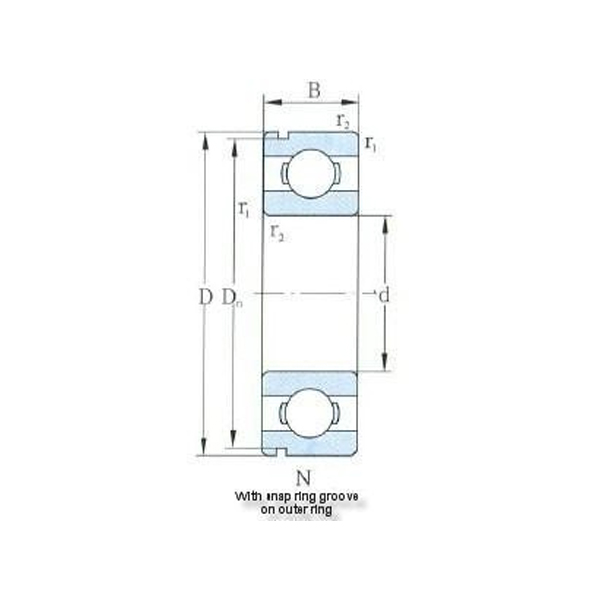
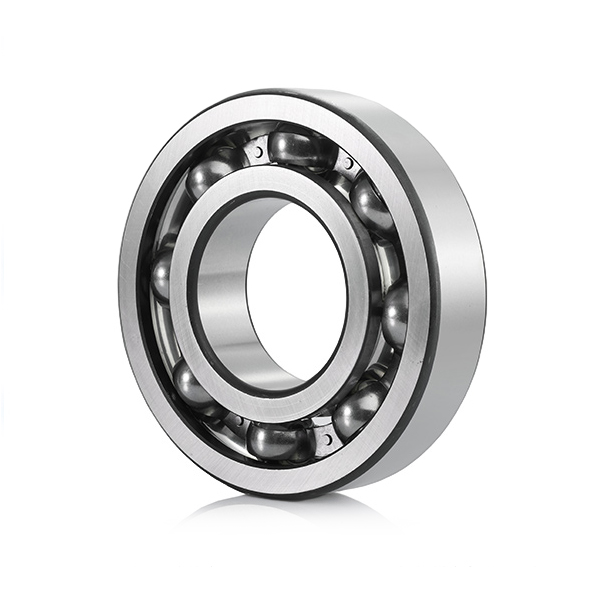
An electric motor behind a conveyor starts to rattle. The housing temperature rises to 84 °C, and after two days of over-greasing, the bearing fails with dark blue races. That sequence is easy to repeat but painful to justify. In our practice at Ningbo Demy Bearings, high bearing temperature is rarely the primary defect; it is the result of friction that has nowhere to go. The right response is to slow down, measure, and correct the cause before another bearing is wasted. This article explains what high bearing temperature really tells you, what temperature limits to rely on, and how to keep bearings within safe range in motors, pumps, and industrial equipment.
There is no single alarm temperature for every rolling bearing. A small deep groove ball bearing in a clean electric motor may run stable at 55 °C, while a large spherical roller bearing in a kiln can operate at 110 °C without damage. As a rough practical rule, the outer-ring temperature of a rolling bearing should stay below 80 °C in general industrial service. Many motor specifications set the limit at 71 °C (160 °F) because that value keeps grease and varnish formation under control. Once the measured temperature passes 90 °C, it is worth investigating; at 120 °C, the bearing is usually at high risk of seizure.
| Bearing type | Normal outer-ring temperature (°C) | Alert level (°C) |
|---|---|---|
| Deep groove ball bearing | 30-80 | 90 |
| Cylindrical roller bearing | 30-85 | 100 |
| Spherical roller bearing | 40-100 | 120 |
| Needle roller bearing | 30-70 | 85 |
These numbers are not hard limits; they depend on lubricant type and load. But they provide a quick way to judge whether a hot bearing is still normal or already at risk.
Heat inside a bearing comes from internal friction, and friction increases when the operating conditions move away from the design point. The most common causes we typically see in the field are:
Each of these causes produces the same symptom, but the countermeasure is different, so temperature alone is not enough for diagnosis.
The immediate damage is to the lubricant. For every 10 °C increase above the rated peak temperature, grease life can be cut roughly in half. Oxidation turns the base oil dark and sticky, starving the contacts. The bearing itself also changes dimensions: the inner ring expands with temperature, and if the clearance was already small, the rolling elements become preloaded. More friction means more heat, and the cycle accelerates. If the inner ring temperature exceeds the outer ring by more than a few degrees, the inner ring can creep and slide on the shaft, leaving a polished or worn shaft surface. Above 150 °C the bearing steel can start to lose hardness, and the raceways begin spalling in a matter of hours.
Figure 1 – Relative grease life as the bearing outer-ring temperature rises above 80 °C.
This pattern explains why a bearing that has run hot is often not worth re-greasing and waiting; the lubricant and the raceway material have already degraded.
Work through the following checks in order before you decide to replace the bearing:
Most high-temperature problems are traced to the first two steps. For a deeper dive into the mechanics of friction in a deep groove ball bearing, our article on how deep groove ball bearings minimize friction and improve operating efficiency explains the key design factors.
If the machine consistently runs above 80 °C, the bearing must be specified with the heat in mind, not treated as an afterthought. Three choices make the biggest difference.
For temperatures above 80 °C, select a bearing with C3 or C4 radial clearance. The extra radial clearance allows the shaft and inner ring to expand without squeezing the rolling elements. Standard bearings can pinch even with a normal press fit once the outer ring stays above 100 °C.
Heat generation is directly related to friction torque. A deep groove ball bearing with a special low-friction cage and optimized raceway geometry reduces churning and sliding at high speeds. This type of bearing is particularly useful in electric motors, pumps, and multi-spindle machines where the bearing should be the least intrusive component.
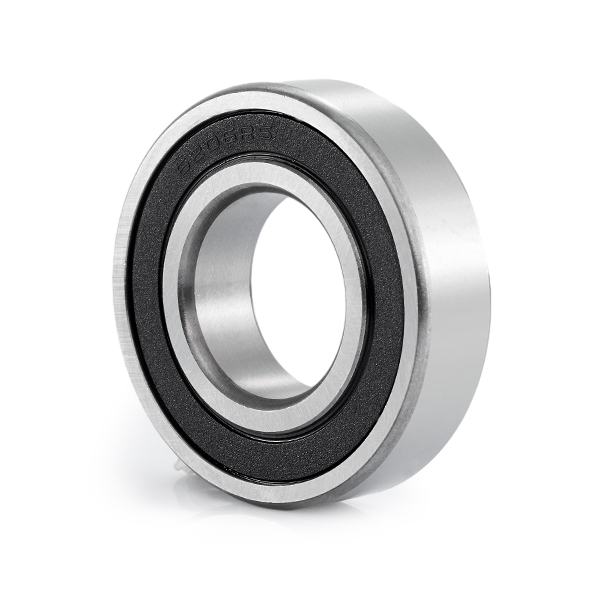 Low-Friction Deep Groove Ball Bearings for High-Speed MotorsThis bearing's low-friction cage and optimized geometry minimize churning and sliding, keeping heat low in high-speed applications such as electric motors and pumps.View Product →
For hot applications with heavy rolling loads and shock, a full complement cylindrical roller bearing uses more rollers per row and therefore creates lower contact pressure than a conventional caged bearing. Fewer rolling elements loaded harder means more internal heat; full complement reduces that heat generation per contact. Similarly, a spherical roller bearing designed for vibratory applications keeps the rollers on a stable track under vibration and high radial load, preventing sliding that would raise temperature further.
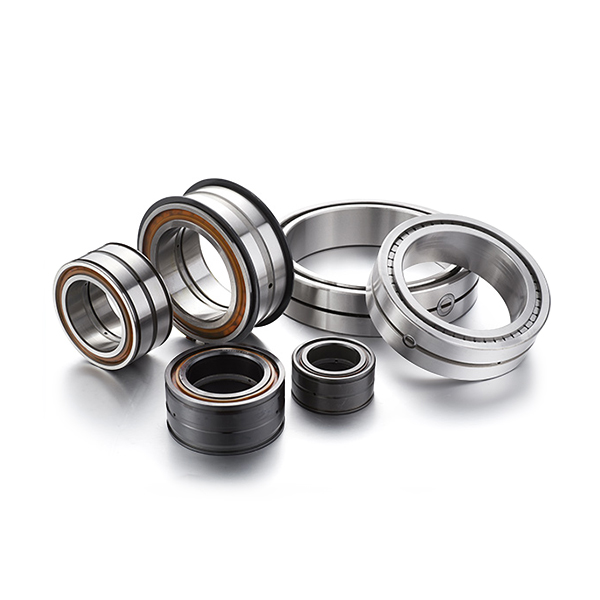 Full Complement Cylindrical Roller Bearings for Heavy Radial LoadsThis cageless design packs more rollers per row, lowering contact pressure and heat generation under heavy radial loads. Built for industrial machinery and gearboxes.View Product →
 Spherical Roller Bearings for Vibratory ApplicationsThis bearing's design keeps rollers stable under heavy vibration, reducing sliding and resulting heat. Suitable for screens, crushers, and vibratory feeders, with high load ratings.View Product →
When selecting from a standard range, our deep groove ball bearing catalog is a useful starting point for most industrial motors and light-to-medium machinery.
After selecting the right bearing, the following operations and maintenance practices help keep temperatures within a safe band:
High bearing temperature is a symptom that with the right data points leads to a practical answer. Start with the temperature limit, investigate lubrication and clearance, then pick a bearing design that reduces friction and tolerates thermal expansion. Taking these steps in order prevents most bearing overheating issues. At the end of the day, a bearing that runs cool is a design decision, not a surprise.

Copyright © Ningbo Demy (D&M) Bearings Co., Ltd. All Rights Reserved.
 OEM/ODM Industrial Bearing Manufacturers

 Search
 EN
 English
 Español