At 3,600 rpm, a motor bearing can run normally for years, then fail within weeks because someone fitted an open bearing in a dusty environment or chose the wrong internal clearance. The deep groove ball bearing is the most widely used rolling bearing design, but its simple appearance hides a long list of specifications that decide service life. This article explains what the bearing is, how it works, what loads it can carry, how to choose among its variants, and where it performs best.
In short, a deep groove ball bearing is the right choice when the load is mainly radial, the axial load is moderate, the speed is within the bearing limit, and the housing can be machined to a simple cylindrical seat. If those conditions are met, it delivers low friction, low maintenance, and reliable life. If they are not, one of the specialized variants described later can often solve the problem.
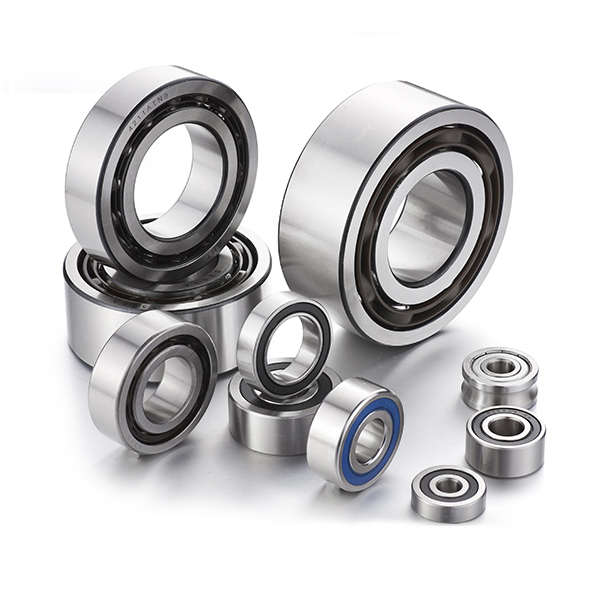
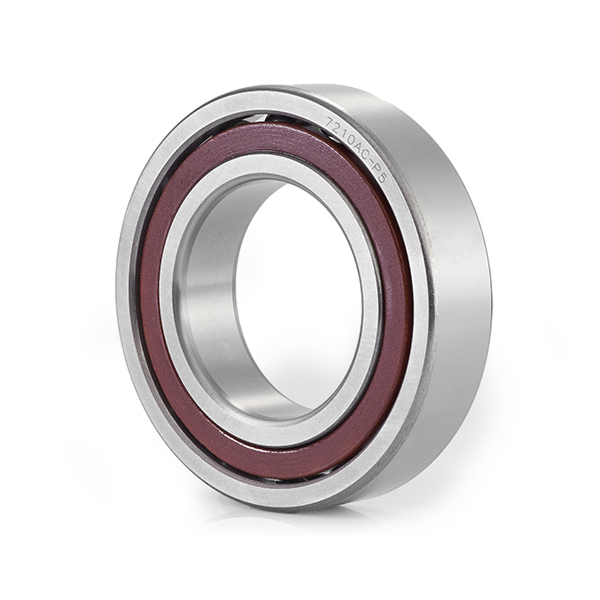
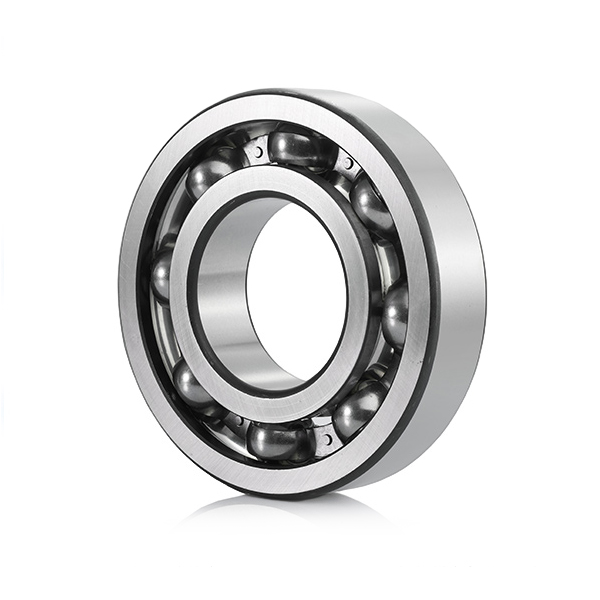
The basic components are an inner ring, an outer ring, a set of balls, a cage, and sometimes seals or shields. The raceway on each ring is a continuous groove with a radius slightly larger than the ball radius. The depth of this groove is what distinguishes a deep groove ball bearing from a shallow-raceway radial bearing; the deeper geometry gives it higher radial capacity for its size and the ability to accept axial load from either direction.
Deep groove ball bearings are available in ISO metric series such as 62 and 63, in inch sizes, and in specialized internal designs. A 6204 bearing has a 20 mm bore, a 47 mm outside diameter, and a 14 mm width. A 6311 bearing has a 55 mm bore, a 120 mm outside diameter, and a 29 mm width. These dimensions are standardized, but the internal details are not identical between manufacturers.
Under radial load, the load is transferred through the rolling elements in the loaded zone. The contact surface between each ball and the deep raceway forms an ellipse, which spreads the contact stress and allows a relatively high load capacity. Because the balls roll rather than slide, frictional torque is low, which is why the bearing works well in high-speed machinery.
Under axial load, the ball contacts one side of the inner ring raceway and the opposite side of the outer ring raceway. This creates a small contact angle that permits thrust load in either direction. The bearing can therefore handle combined radial and axial loads at the same time. However, a pure axial load higher than roughly a quarter of the dynamic radial rating is usually better handled by a thrust ball bearing.
The capacity of a deep groove ball bearing is described by the basic dynamic load rating C and the basic static load rating C0. A standard 6311 bearing, for example, has a dynamic load rating around 55 kN and a static rating around 35 kN. These values assume clean raceways, correct lubrication, and proper alignment. Actual service life depends on the equivalent load P, which combines radial and axial components according to catalogue calculation methods.
Speed limits are usually given as a reference speed and a limiting speed. Reference speed is the speed that can be maintained under normal heat balance; limiting speed is the maximum speed before the cage and lubrication become unstable. Sealed bearings with contact rubber seals generally have lower speed limits than open bearings because seal drag generates heat and restricts grease movement. When speed is critical, the bearing needs a low-friction cage, high-precision balls, and the correct internal clearance.
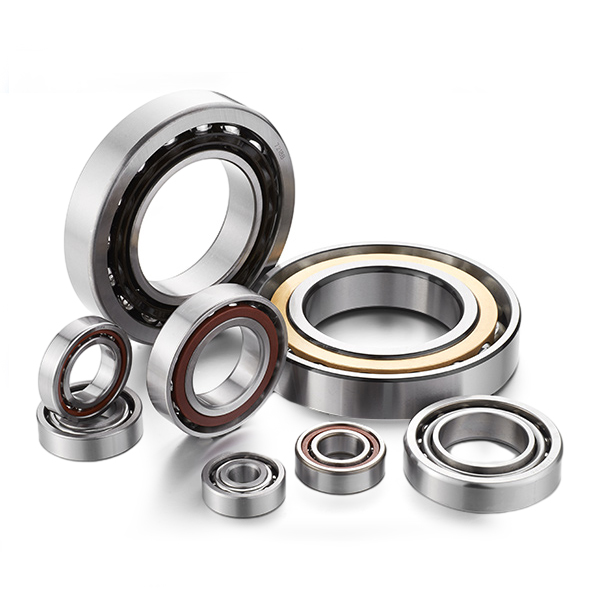
The balance between capacity, speed, protection, and mounting convenience explains why so many deep groove ball bearing variants exist. The most common options are open, shielded, sealed, with a snap ring, with filling slots, and with high-speed low-friction geometry.
| Variant | Key structural feature | Typical application |
|---|---|---|
| Open bearing | No shield or seal; highest speed with oil lubrication | Gearboxes, machine tools |
| Shielded (2Z) | Metal shield; low friction and good particle exclusion | Electric motors, pumps |
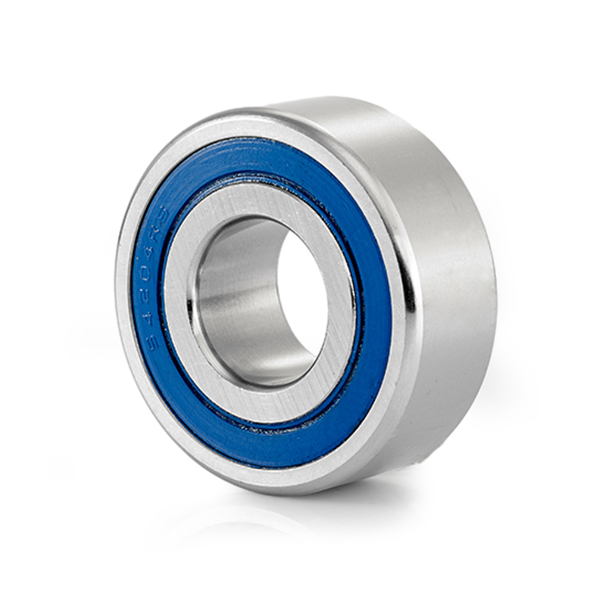
| Sealed (2RS) | Contact rubber seal; keeps grease in, contamination out | Conveyors, agricultural equipment |
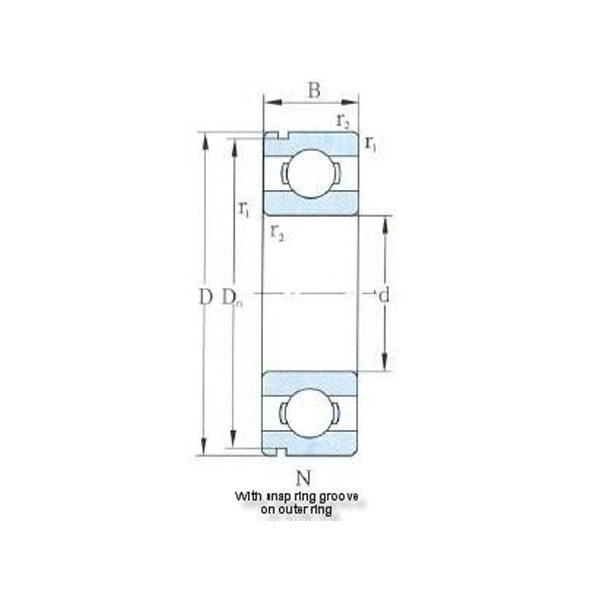
| Snap ring | Groove and ring on outer ring; simple housing location | Appliance motors, compact assemblies |
| Filling slots | More balls through a slot; higher radial capacity | Heavy radial loads with low axial load |
| High-speed low-friction | Optimized raceway, cage, and grease; lower torque | Spindle motors, high-speed rotating equipment |
For compact assemblies where the outer ring must be located axially, a deep groove ball bearing with snap groove and snap ring reduces housing length and avoids a separate retaining shoulder. For example, this deep groove ball bearing with snap groove and snap ring is often used in small electric motors and fan housings.
When radial capacity is the first priority and axial load is known to be low, a deep groove ball bearing with filling slots allows more balls to be loaded into the same envelope. Deep groove ball bearings with filling slots increase radial capacity but reduce axial capacity, so they must be specified only when thrust load is limited.
For high-speed machines, internal geometry and cage quality matter more than the basic dimensions. High-speed low-friction torque deep groove ball bearings are designed to reduce heat generation and are a practical response when a standard open bearing runs too hot.
Most deep groove ball bearings are made of high-carbon chromium steel hardened to about 60 to 62 HRC. For humid or corrosive environments, stainless steel or specially treated surfaces can be used. The cage keeps the balls spaced and prevents metal-to-metal contact. Stamped steel cages are strong and economical, polyamide cages run quietly, and machined brass cages are preferred for high speed and heavy load.
Seals and shields must be selected together with the lubricant. A contact seal with lithium grease can handle a broad temperature range but adds drag. A low-friction torque design may use a special grease and a modified seal lip. Too much grease in a sealed bearing can cause rapid temperature rise; too little grease shortens lubrication life. The manufacturer specification is the best starting point for any application.
A simple selection process avoids the common mistake of ordering only by bore size and series:
Following these steps keeps the final choice aligned with real working conditions rather than a catalogue image.
Fractional-horsepower electric motors use deep groove ball bearings because they run quietly; large industrial motors use them because they can handle moderate axial thrust from helical gears. Conveyor rollers, belt tensioners, fans, pumps, and small gearboxes are typical applications. In vehicles, the bearing supports alternator shafts, water pumps, manual transmission shafts, and idler pulleys.
Agricultural machinery often uses deep groove ball bearings inside mounted housings to resist moderate shock and dust. Because the same basic size can be produced with different clearances, cages, seals, and internal geometry, a motor manufacturer and a pump manufacturer can both use a 6205 bearing while receiving completely different service behaviour. That is why manufacturing consistency matters.
Mounting should apply force only to the ring with the interference fit. If the shaft is tight and the housing is not, press on the inner ring. If the housing is tight, press on the outer ring. Never transfer mounting force through the balls, because this can indent the raceways and create noise or early failure.
During operation, changes in temperature, noise, or vibration are the first signs of trouble. A sudden temperature rise often indicates lubrication breakdown, excessive preload, or incorrect grease quantity. Rising noise may mean contamination, brinelling, or fatigue. Open bearings usually need scheduled relubrication, while sealed bearings are often lubricated for life.
Deep groove ball bearing failure is rarely caused by the steel grade alone; it is more often caused by raceway geometry, ball roundness, cage quality, or sealing consistency. A supplier with modern production lines and complete testing equipment can keep these parameters within tight limits across large production batches. ISO/TS 16949 certification indicates a quality system aimed at automotive supply chains, and full testing equipment provides dimensional, noise, and vibration data for each batch.
Ningbo D&M Bearings Co., Ltd. produces deep groove ball bearings under the D&M and LUMAN brands, supported by a 20,000 square metre manufacturing base and automated inspection. When the requirement is thousands of identical bearings with stable noise and fit, a manufacturer that controls both material and assembly processes is a better partner than a distributor that simply resells boxes. To explore available sizes and configurations, start with the company's deep groove ball bearings product line.

Copyright © Ningbo Demy (D&M) Bearings Co., Ltd. All Rights Reserved.
 OEM/ODM Industrial Bearing Manufacturers

 Search
 EN
EN English
 Español