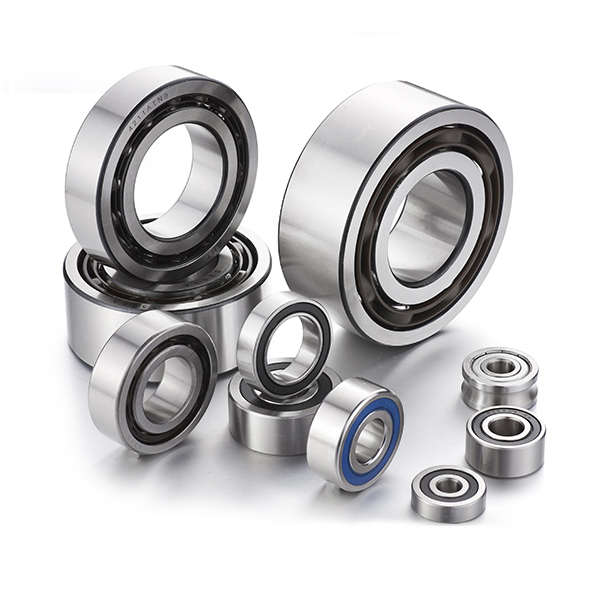
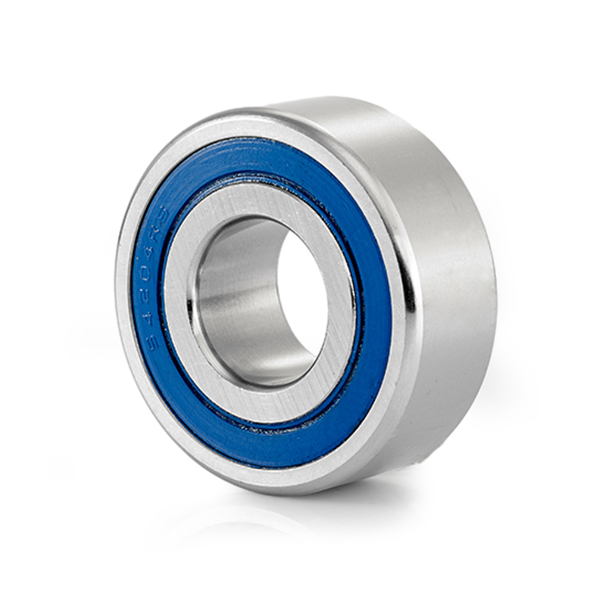
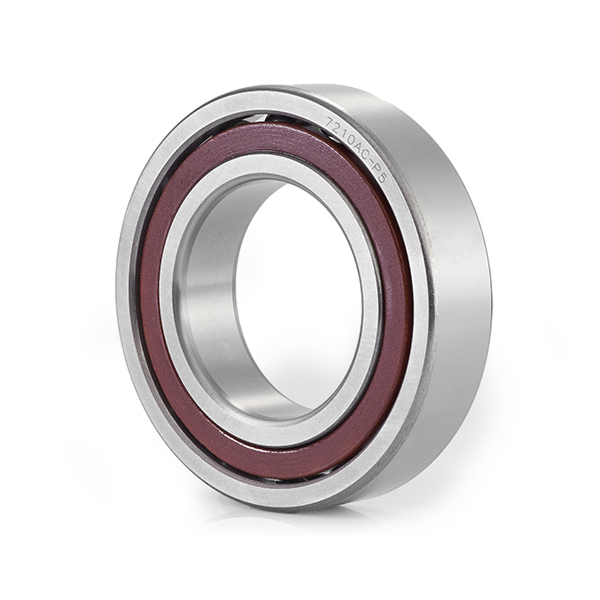
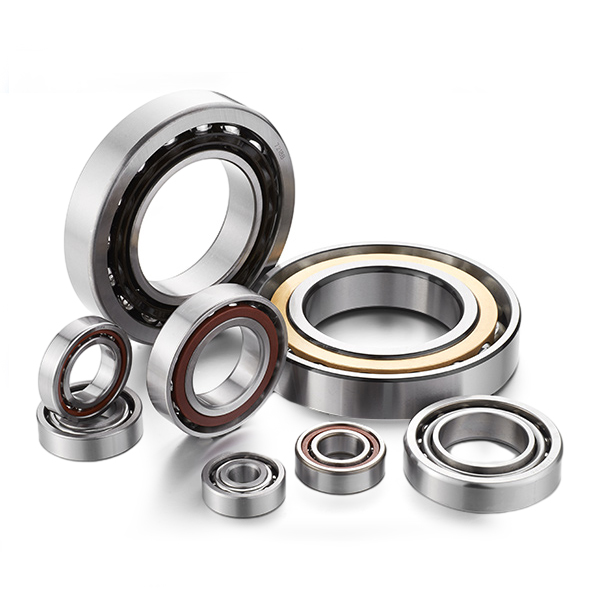
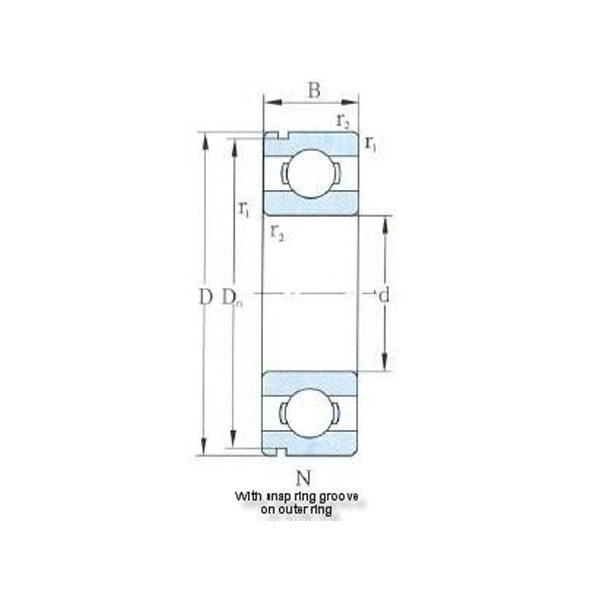
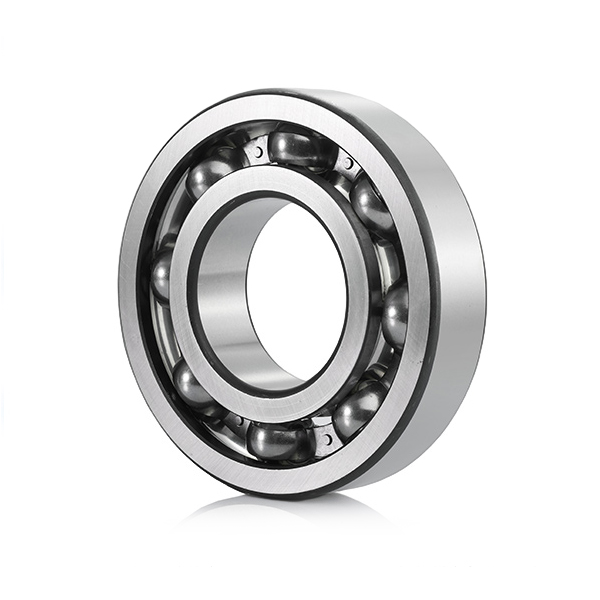
It usually starts as a low hum that gradually becomes a rhythmic growl, louder with speed and more obvious during turns. A worn wheel bearing is a common reason, but a modern car carries many different bearings, each with its own load, temperature, and speed limits. Knowing how these parts behave, how they fail, and how to select a replacement can save you from a breakdown on the highway or a costly repair at the next inspection.
An automobile bearing is a precision component that supports a rotating shaft or axle while allowing it to turn with minimal resistance. Bearings carry radial loads (perpendicular to the shaft), axial loads (along the shaft), or both. They also maintain correct clearance between moving parts, keep rotation centered, and transmit forces from one component to another. Inside a vehicle, bearings face water spray, road salt, dust, vibration, and temperatures that can swing from -40°C to more than 120°C within minutes.
Bearing failure in a vehicle rarely comes from one single decision. Contamination, lack of lubrication, excessive preload, corrosion, poor heat treatment, and inaccurate geometry all shorten service life. The earliest signs usually appear as noise, slight free play, or oil leakage. If you catch the problem early, you can often replace only the bearing. If you do not, the surrounding parts—hub flange, shaft, gearbox casing—may be damaged as well.
The most visible bearing to a driver is the wheel hub bearing. It supports the weight of the car, keeps the wheel aligned, and lets it spin freely. A typical front-wheel-drive car uses a hub unit that combines two rows of ball bearings, a flange, maybe an ABS sensor ring, and a pre-sealed grease package. When this bearing wears, you hear a humming or grinding sound that changes with speed. It may get worse when turning left or right because the load moves from one bearing row to the other.
A quality replacement such as a front wheel bearing and hub assembly must match the original bore diameter, bolt pattern, ABS tone ring, and flange offset exactly. Do not choose a part just because the bolt holes line up. Small differences in the internal clearance or raceway curvature will shorten the service life and make the noise come back after only a few thousand kilometres.
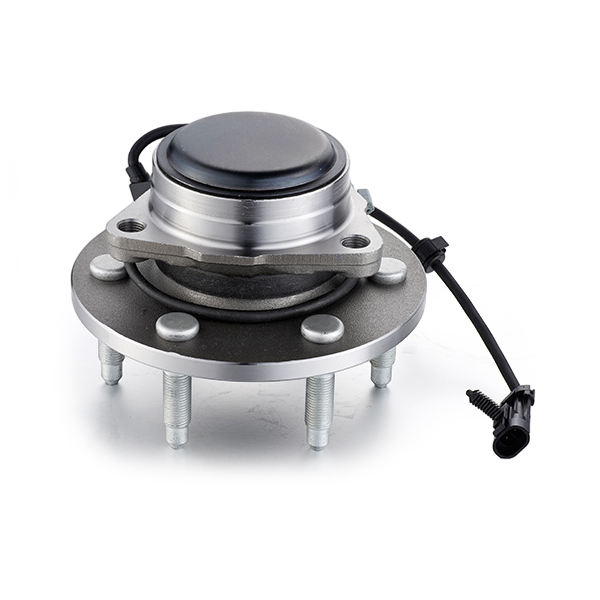 Wholesale Front Wheel Bearing and Hub Assembly Suppliers, Manufacturers - NingboNingbo Demy (D&M) Bearings Co., Ltd. is China wholesale Front Wheel Bearing and Hub Assembly suppliers and Front Wheel Bearing and Hub A...View Product →
Alternators, belt tensioners, cooling fans, and water pumps use compact ball or roller bearings that run continuously while the engine is on. The water pump is one of the most common wear points on many engines. Coolant can leak past the pump seal, wash out the grease, and attack the bearing raceway. The pump then starts to whine, leaks coolant, and eventually begins to wobble. For this application, a dedicated automotive water pump bearing is a better solution than a generic ball bearing, because it uses a larger rolling-element set and a specially designed sealing system that stands up to ethylene-glycol contamination longer.
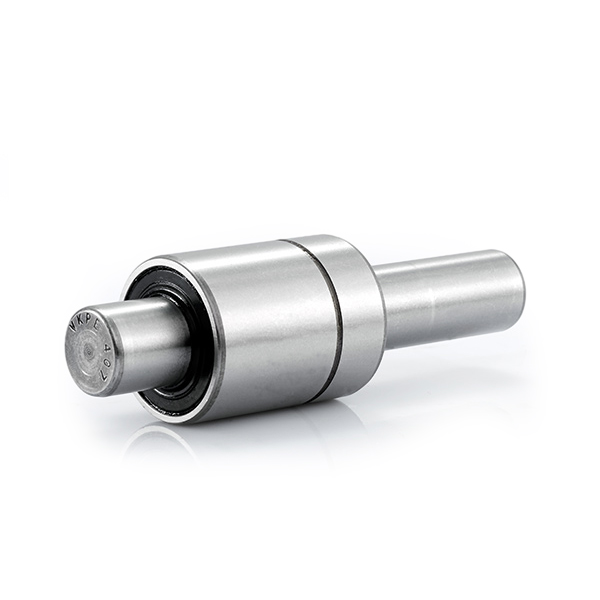 Wholesale Auto water pump bearings Suppliers, Manufacturers - Ningbo Demy (D&M) Ningbo Demy (D&M) Bearings Co., Ltd. is China wholesale Auto water pump bearings suppliers and Auto water pump bearings manufacturers,Au...View Product →
In a manual transmission, the clutch release bearing (sometimes called the throw-out bearing) slides along the input shaft when the driver presses the clutch pedal. It carries a heavy axial load every time the clutch is engaged or disengaged. A worn release bearing produces a chirping or rustling noise that appears only when the pedal is partly pressed. If it fails completely, the clutch pedal can feel spongy, and you may notice a grinding sound that disappears when the pedal is released.
Replacing a release bearing is labor intensive because the gearbox has to be lowered. Many owners therefore choose an automotive clutch release bearing with a one-piece housing and sealed-for-life grease instead of an open bearing that relies on residual clutch dust for lubrication. The extra cost is small compared with doing the job twice.
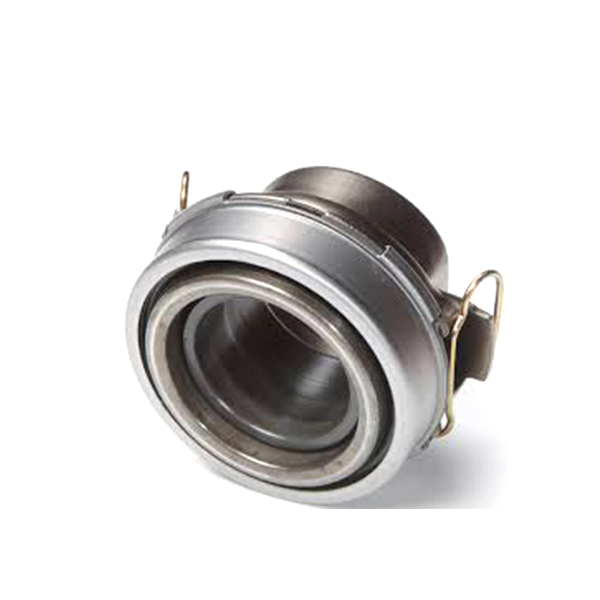 Wholesale Automotive clutch release bearing Suppliers, Manufacturers - Ningbo DeNingbo Demy (D&M) Bearings Co., Ltd. is China wholesale Automotive clutch release bearing suppliers and Automotive clutch release bearin...View Product →
Battery-electric cars put new demands on bearings. The traction motor can spin above 10,000 rpm, and the e-axle often combines gearbox, motor, and electric drives in one compact housing. Motor bearings may be exposed to high-frequency current that can pass through the bearing and damage the raceway. Ceramic-hybrid ball bearings are sometimes installed on the motor shaft because the ceramic balls act as insulators and reduce heat generation. The same design logic is now moving into hybrid vehicles, where the e-motor sits between the combustion engine and gearbox.
Engineers choose a bearing type based on the direction and size of the load, the expected speed, the available space, and how much misalignment the machine tolerates. The table below summarizes the bearing types most often found in passenger cars and light trucks.
| Bearing type | Typical characteristics | Common automotive application |
|---|---|---|
| Deep groove ball bearing | Handles radial and moderate axial loads; low friction; supports high speeds | Wheel hubs, alternators, belt tensioners |
| Angular contact ball bearing | Carries combined radial and one-direction axial loads | Wheel hub units, steering pumps, transmission shafts |
| Cylindrical roller bearing | High radial load capacity; allows some axial displacement | Differential side bearings, gearbox shafts |
| Needle roller bearing | Very compact cross-section; high radial load in a narrow space | Rocker arm pivots, U-joints, synchronizer rings |
| Thrust ball bearing | Handles pure axial loads at low-to-medium speeds | Steering columns, jack shafts, reverse-idler gears |
Many modern hubs use double-row angular contact bearings because the two races share a wide base and give better rigidity under cornering. Four-point contact ball bearings are also used when the load is mainly axial but occasional radial forces occur. For heavy rear axles, full-complement cylindrical roller bearings provide high radial capacity without a cage, at the cost of lower allowable speed.
Bearings usually give you enough warning if you pay attention. These are the symptoms that should not be ignored:
A hub bearing that is failing often gets quieter for a moment when you steer in one direction, then louder in the other direction. A release bearing, by contrast, makes noise mainly when the clutch pedal is pressed. Bearings do not repair themselves. Once the race surface has spalled or the grease has hardened, the logical choice is replacement, not adding lubricant.
The part number and the bore size are only the beginning. A genuine catalogue gives you additional parameters that decide whether the bearing will survive in a hot, vibrating car body:
Cheap bearings can look identical from the outside. The danger is that a low-cost, fake or unbranded product uses poor-grade steel, has uncontrolled heat treatment, and passes through no final inspection. The first symptom is often noise after five thousand kilometres; the second can be pitting, surface flaking, or a sudden impact failure. If you want to avoid that outcome, look at the manufacturer’s quality system and production data. You can read more about why automotive bearings are built to last by studying how the supplier controls grinding, heat treatment, and final testing.
An automobile bearing is a safety-critical part, even if it costs only a few dollars. Whether you are an OEM buyer, a warehouse distributor, or a fleet maintenance team, the difference between bearing A and bearing B shows up in warranty claims and customer confidence. A supplier who follows a recognised automotive quality management system, such as ISO/TS 16949, and runs dedicated production lines for hub units, clutch release bearings, and water pump bearings will always have more consistent raceway hardness and dimensional accuracy than a general-purpose bearing plant.
Good automotive bearing manufacturing is not only about the grinding machine. It also depends on material flow and traceability from raw steel to finished package. A plant with more than 20,000 square metres of manufacturing space, automatic transfer lines, and complete test equipment can handle several bearing families at once without mixing batches. With two automotive brands (BMT and LUMAN) and a catalogue that includes deep-groove ball bearings, replacement hub units, and water pump bearings, D&M Bearings follows that model for both original-equipment and aftermarket buyers.
Before you place a large order, ask for dimensional reports, noise and vibration test values, and heat-treatment records. A reliable partner should offer measurement comparisons, explain deviations honestly, and show how the bearing was cleaned and packaged. That kind of transparency is the real quality standard in automobile bearing supply.

Copyright © Ningbo Demy (D&M) Bearings Co., Ltd. All Rights Reserved.
 OEM/ODM Industrial Bearing Manufacturers

 Search
 EN
EN English
 Español