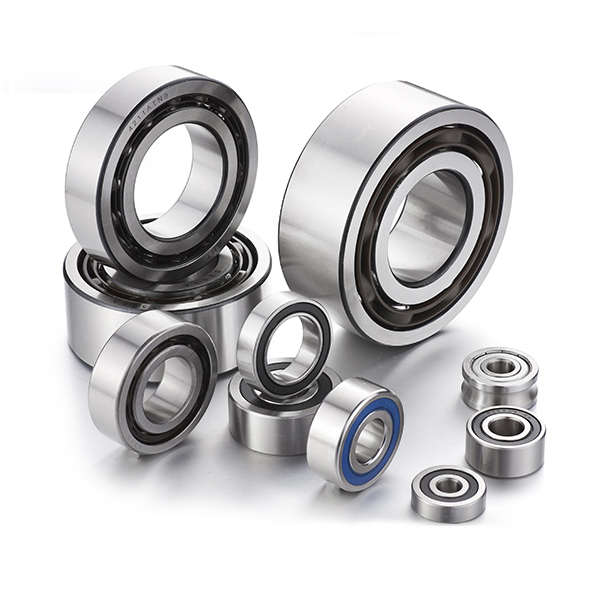
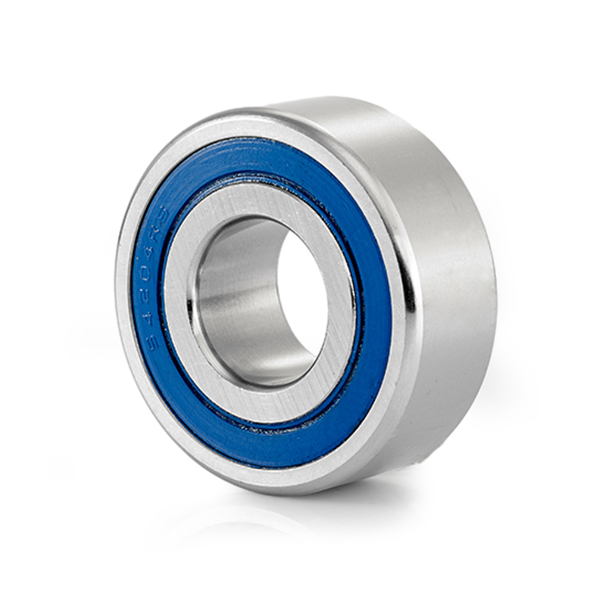
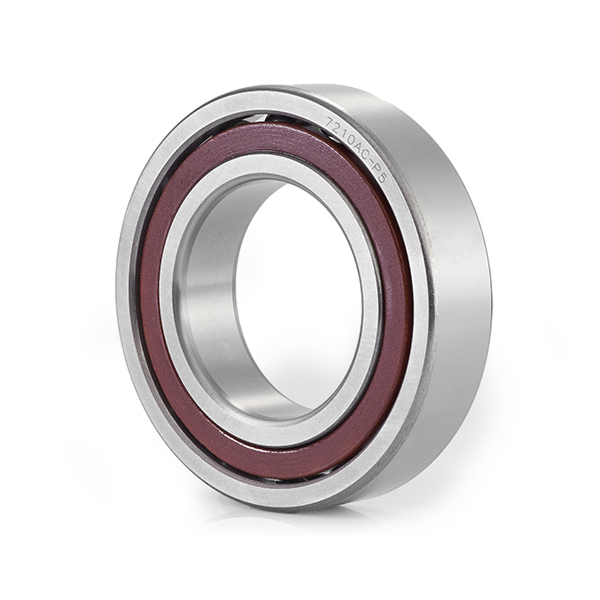
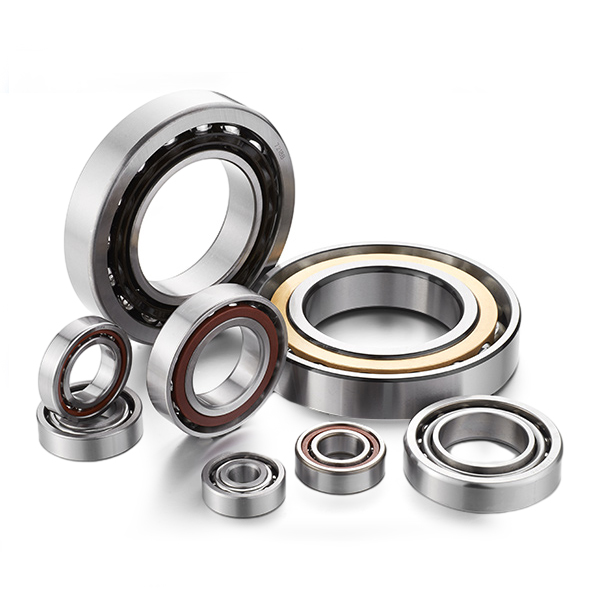
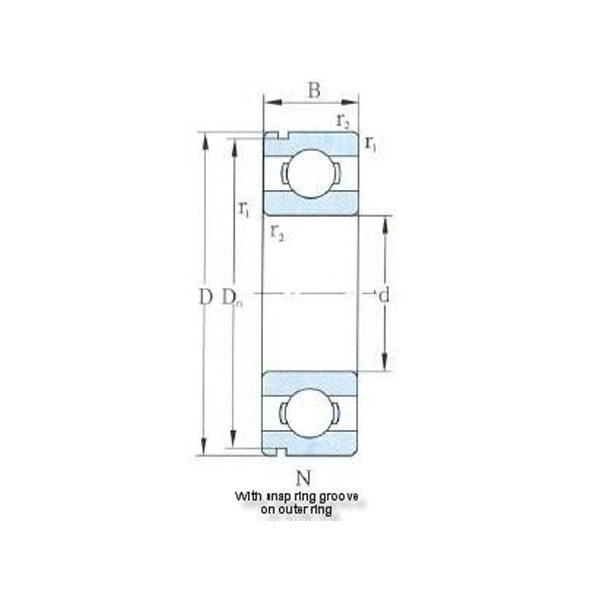
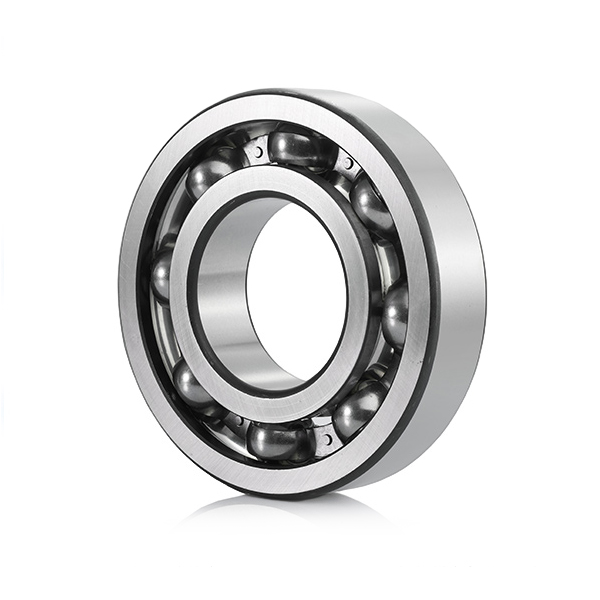
Deep groove ball bearings are among the most widely used rolling bearings in industrial and consumer applications. Their basic structure consists of an inner ring, an outer ring, a set of steel or ceramic balls, and a cage that maintains ball spacing. The deep raceway grooves on both rings allow the balls to be guided smoothly during rotation. Because of this simple yet robust design, deep groove ball bearings are commonly found in motors, pumps, household appliances, and various types of rotating machinery.
When evaluating whether deep groove ball bearings are suitable for precision or low-noise equipment, it is necessary to consider characteristics such as dimensional accuracy, rotational smoothness, internal clearance, and surface finish. Precision equipment requires bearings that maintain stable rotational accuracy under load, while low-noise equipment demands minimal vibration and sound during operation. Deep groove ball bearings can meet these requirements under certain conditions, depending on their manufacturing quality, materials, and application environment.
Deep groove ball bearings are produced in various tolerance grades defined by international standards. Higher tolerance grades involve tighter control over dimensions, roundness, and surface roughness of the rings and balls. Bearings manufactured to these tighter tolerances exhibit smoother rotation and more consistent performance. In precision equipment, selecting an appropriate tolerance grade helps reduce rotational deviation and contributes to stable operation. Lower-grade bearings may still function well in general machinery but may not meet the demands of sensitive or high-precision systems.
Noise in rolling bearings originates from several sources, including surface irregularities, ball-to-raceway contact, cage movement, and lubrication behavior. In deep groove ball bearings, the point contact between the balls and raceways can generate vibration if surface finishes are inconsistent or if internal clearance is not properly matched to operating conditions. Manufacturing quality plays a significant role in minimizing these noise sources, making well-produced deep groove ball bearings suitable for applications where low operational noise is required.
Internal clearance refers to the small amount of free movement between bearing components before installation. The choice of internal clearance affects both precision and noise characteristics. Bearings with smaller clearances generally provide higher rotational accuracy and reduced vibration, which is beneficial for precision equipment. However, if the clearance is too small for the operating temperature and load, it may lead to increased friction and noise. Proper selection of internal clearance ensures balanced performance in both precision and low-noise applications.
Lubrication has a direct impact on bearing noise and smoothness. In deep groove ball bearings, grease or oil forms a thin film between the rolling elements and raceways, reducing friction and damping vibration. High-quality lubricants with appropriate viscosity can significantly lower noise levels. In low-noise equipment, manufacturers often use specially formulated greases designed to minimize acoustic emission while maintaining stable lubrication over long operating periods.
The materials used for rings and balls influence both precision and noise behavior. Standard bearing steel provides reliable performance, while ceramic balls or hybrid designs can reduce mass and friction, leading to smoother rotation and lower noise. Surface finish quality is equally important. Smooth, finely finished raceways and balls reduce micro-vibrations during rolling contact, which contributes to quieter operation and more consistent rotational accuracy.
| Bearing Type | Precision Capability | Noise Characteristics | Typical Applications |
| Deep Groove Ball Bearing | Moderate to high with proper grade | Low when well-manufactured and lubricated | Motors, appliances, general machinery |
| Angular Contact Ball Bearing | High for axial and combined loads | Controlled noise with correct preload | Machine tools, precision spindles |
| Roller Bearing | High load capacity, moderate precision | Generally higher noise due to line contact | Heavy-duty industrial equipment |
Deep groove ball bearings can be suitable for precision equipment when selected and applied correctly. In applications where radial loads dominate and rotational speeds are stable, these bearings provide consistent accuracy. Precision instruments, small electric motors, and measuring devices often use high-grade deep groove ball bearings due to their predictable behavior and compact design. While they may not replace specialized bearings in ultra-high-precision systems, they serve reliably in many precision-oriented applications.
Low-noise equipment such as household appliances, office devices, and medical instruments often rely on deep groove ball bearings. Their simple geometry and ability to operate smoothly at various speeds make them suitable for quiet operation. When combined with refined surface finishes, optimized internal clearance, and appropriate lubrication, deep groove ball bearings can achieve low sound levels that meet the expectations of noise-sensitive environments.
Even a high-quality bearing can produce noise or reduced precision if improperly installed. Misalignment, excessive preload, or contamination during installation can introduce vibration and sound. Deep groove ball bearings require careful handling, clean assembly conditions, and correct shaft and housing tolerances. Proper installation ensures that the bearing performs as intended in precision or low-noise equipment.
Operating speed, load variation, and temperature all influence bearing behavior. Deep groove ball bearings generally perform well over a wide speed range, which supports stable and quiet operation. However, extreme loads or rapid load changes can increase vibration. In precision or low-noise equipment, maintaining stable operating conditions helps ensure consistent performance and minimizes acoustic emission.
Over time, wear, lubricant degradation, and contamination can increase noise and reduce precision. Regular maintenance practices such as relubrication and inspection help preserve bearing performance. In sealed or shielded deep groove ball bearings, factory-applied lubrication and contamination protection extend service life and maintain low-noise operation over extended periods.
While deep groove ball bearings offer a balance of cost, availability, and performance, designers must consider trade-offs. For applications requiring extremely high positional accuracy or minimal axial play, other bearing types may be preferred. However, for many systems where moderate precision and low noise are required simultaneously, deep groove ball bearings provide a practical and reliable solution.
Examples of precision or low-noise equipment using deep groove ball bearings include cooling fans, small servo motors, laboratory devices, and audio equipment. In these applications, the bearing’s smooth rotation and predictable behavior support stable operation without excessive sound generation. The widespread use of these bearings in such products demonstrates their suitability when properly specified.
Deep groove ball bearings are suitable for precision and low-noise equipment when attention is given to tolerance grade, internal clearance, lubrication, and installation quality. Their design allows for smooth rotation and controlled vibration, making them a common choice across many industries. While not always the first choice for extreme precision requirements, they remain a dependable option for a wide range of applications that balance accuracy, noise control, and practical design considerations.

Copyright © Ningbo Demy (D&M) Bearings Co., Ltd. All Rights Reserved.
 OEM/ODM Industrial Bearing Manufacturers

 Search
 EN
EN English
 Español