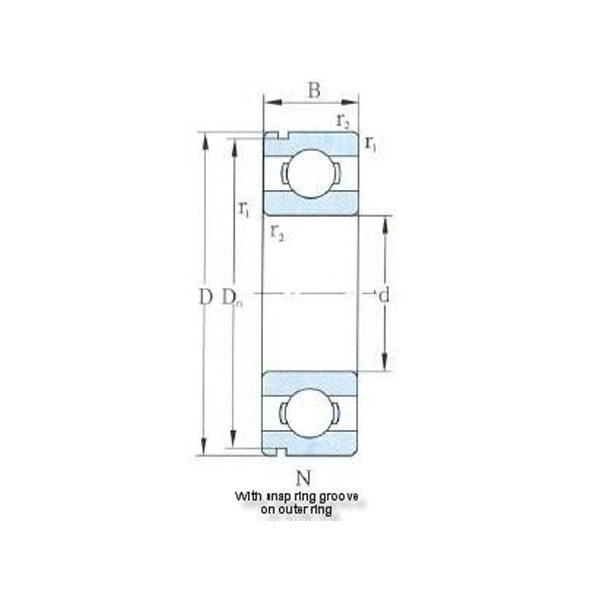
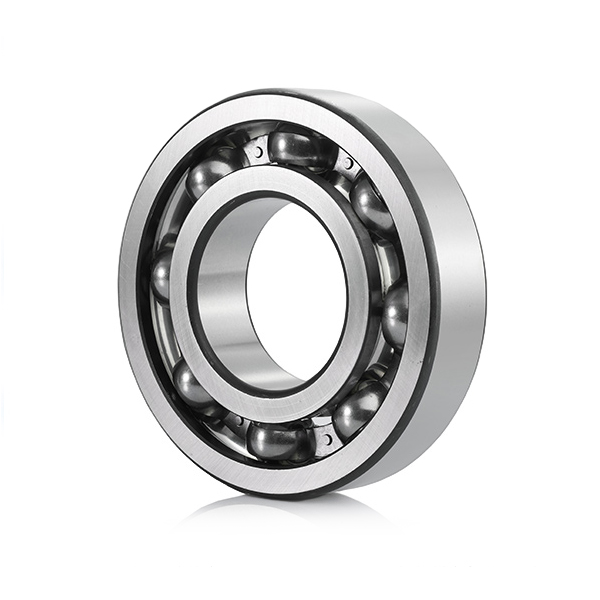
Sealing design, not raw load rating, is usually what separates a bearing that survives a full harvest season from one that fails within weeks — and this is precisely where agricultural bearings manufacturers differentiate most from general industrial bearing suppliers. Farm equipment exposes bearings to dust, mud, moisture, and constant vibration in ways factory-floor machinery never experiences, so a bearing engineered for clean indoor conditions will underperform badly in a field environment even with an identical load rating on paper. Comparing manufacturers on sealing quality, material treatment, and mounting flexibility gives a far more accurate picture of real-world durability than comparing catalog specifications alone.
Contamination ingress is the leading cause of premature bearing failure in agricultural equipment, and the seal design used by different agricultural bearings manufacturers varies considerably in how well it keeps dust, chaff, and moisture out of the raceway.
| Seal Type | Contamination Resistance | Typical Use Case |
| Single Lip Seal | Basic — adequate for light-duty, low-dust environments | Indoor equipment, light attachments |
| Triple-Lip Contact Seal | High — multiple contact points block dust and moisture ingress | Tillage equipment, planters, disc harrows |
| Labyrinth Seal with Flinger | Very high — non-contact design resists heavy mud and water exposure without wearing down | Combine harvesters, wet-field operations |
Single lip seals cost less and suit equipment operating mainly in cleaner, indoor, or low-dust environments, but they wear down relatively quickly under constant field abrasion. Triple-lip contact seals add meaningfully better protection for the additional cost, making them a common standard among agricultural bearings manufacturers targeting general field equipment. Labyrinth seals paired with a flinger — a rotating disc that throws off water and debris before it reaches the seal itself — offer the strongest protection for equipment regularly exposed to standing water or heavy mud, since the non-contact design doesn't wear down the way contact seals do over thousands of hours of rotation.
Bearing steel grade and heat treatment process directly affect fatigue life and resistance to the shock loading common in field operations, where bearings regularly encounter sudden impacts from rocks, roots, and uneven terrain.
Case-hardened bearings generally show measurably better resistance to spalling — surface fatigue damage — under repeated shock loading than through-hardened equivalents, which is one reason many agricultural bearings manufacturers reserve this treatment for bearings destined for high-impact applications like disc harrow gangs or combine header components, rather than applying it uniformly across their entire catalog.
How a bearing integrates into surrounding equipment structure affects both installation labor and long-term maintenance access, and the choice between mounted and unmounted designs depends heavily on the specific machine and how often bearings need replacement in the field.
| Bearing Format | Installation Complexity | Field Replacement Ease |
| Unmounted (Bare) Bearing | Higher — requires precise housing and alignment | Lower — often needs shop equipment for press-fit removal |
| Mounted Unit (Pillow Block, Flange) | Lower — pre-assembled housing simplifies installation | Higher — bolt-on design allows quicker field swaps |
Mounted units, such as pillow block or flange-mounted bearings, dominate agricultural applications specifically because farm equipment often needs bearing replacement in the field or a farm shop rather than a fully equipped maintenance facility. The self-aligning capability built into many mounted units also accommodates the shaft misalignment that naturally occurs as agricultural equipment frames flex and wear over seasons of heavy use, something rigid unmounted bearings handle far less gracefully.
Load demands vary enormously across agricultural machinery categories, and matching bearing load rating to actual operating conditions — rather than defaulting to a generic "heavy-duty" label — prevents both premature failure and unnecessary overspending.
Overspecifying load rating without addressing sealing or heat treatment needs is a common inefficiency — a bearing rated for double the actual load requirement still fails prematurely if its seal design lets abrasive field contaminants into the raceway, since load capacity alone doesn't protect against contamination-driven wear.
Lubrication approach significantly affects how often agricultural bearings require servicing, and this varies notably across product lines from different agricultural bearings manufacturers.
| Lubrication Type | Maintenance Interval |
| Grease Fitting (Re-lubricatable) | Every 8–50 operating hours depending on conditions |
| Sealed-for-Life | No routine re-lubrication; replacement at end of service life |
Re-lubricatable bearings with grease fittings suit high-load,

Copyright © Ningbo Demy (D&M) Bearings Co., Ltd. All Rights Reserved.
 OEM/ODM Industrial Bearing Manufacturers

 Search
 EN
EN English
 Español